Visita 360

Playa de la Vigía

Playa del Vigía, or Playa del Puente del Vigía, is a quiet and uncrowded spot, ideal for unwinding and enjoying fishing from the walkway.

There you will find the Vigía Pier, an iconic spot that combines maritime history and natural beauty. Built in 1964 to replace a wooden structure damaged by storms in December 1963, this pier was essential for the port’s pilotage service, from where the pilots’ canoes set out to guide ships in and out of the port.
In 2001, due to the deterioration of the original walkway, a new structure 105 metres long and 2.5 metres wide was built, culminating in an 18×18-metre hexagonal platform.

The pier is located on the left bank of the estuary, about 20 kilometres from the city of Huelva.
Next to the pier is the Casa del Vigía (Watchman’s House), built in 1906 on the same dune, with a reinforced concrete frame and floors and supported by 16 posts. It was the first building in Huelva to use this construction material. The project for this building was drawn up by the chief engineer Francisco Montenegro y Calle on 23 November 1904.

The building was used for years to control the entry and exit of ships through the Padre Santo channel and to mark the estuary. The watchman’s shift lasted one week, with relief coming on Saturdays. The house was also used by the channel depth survey staff as a support centre for their bathymetric work.

Mazagón

Mazagón Beach is one of the most outstanding natural treasures on the Huelva coast, shared by the municipalities of Palos de la Frontera and Moguer. This extensive coastline, more than 9 km long, stretches from the Muelle del Vigía pier in the Ciparsa area to the Parador de Mazagón hotel, offering visitors a privileged setting where nature and the sea merge in perfect harmony.

The beach is surrounded by a stunning natural landscape, with sand dunes, pine forests, junipers and sabinas, giving it a unique and unspoilt character. It has adequate access for family tourism, making it an ideal choice for those seeking tranquillity and contact with nature. Depending on the area, you can find services such as showers, toilets, parasol and sun lounger hire, and food and drink establishments.

One of the main attractions of Mazagón Beach is its spectacular sunsets, which paint the sky with warm tones and offer unforgettable views. In addition, the environment is ideal for activities such as hiking, bird watching and water sports.

Mazagón is a district located on the Huelva coast, administered by the Palos de la Frontera – Moguer association of municipalities. This collaboration between the two municipalities has enabled the sustainable development of the area, preserving its natural wealth and promoting responsible tourism.

Matalascañas

Countless gastronomic offerings, leisure activities, outdoor pursuits, nightlife, and water sports, as well as camel and horse rides through the dunes and along the shore, make Playa de Matalascañas an incomparable setting and a must-see for all ages. A privileged place where light, nature, and climate come together to offer the most beautiful sunsets and the most unique views of Torre La Higuera.

Matalascañas offers visitors a wide variety of tourist accommodation, including tourist apartments, hostels, and hotels with up to four stars, giving tourists the opportunity to enjoy exclusive experiences, both inland and on the shores of the Atlantic Ocean. It is an ideal destination for singles, couples, and families due to its numerous services and options for relaxation, sports, and entertainment, as well as for hosting personal and business events. Without a doubt, this extraordinary setting offers visitors excellent facilities and quality service that guarantee a successful stay in Playa de Matalascañas.

A maze of trails and paths wind through an area of dunes and pine trees, where visitors can gaze out over the endless Atlantic Ocean on one side and a vast sea of green pine forests on the other. This is the Dunar Park, a truly delightful place where riding a dromedary across the dunes or horseback riding along the shore becomes an unforgettable experience for nature lovers. With the aim of revitalizing and restoring the area, the Parque Dunar Association organizes hiking and environmental education activities, bringing together ecotourism, sport, and leisure in this splendid Doñana Park.

Kilometers of bike paths run through the Matalascañas urbanization, passing through pine trees and scrubland along the Paseo Doñana, parallel to the National Park and connecting Matalascañas with Mazagón. Likewise, walking along the Sendero Dunar trail, visitors will discover the most important system of shifting dunes remaining on the Iberian Peninsula and one of the most spectacular landscapes in Doñana.

Throughout the year, Matalascañas hosts popular races and sporting events for lovers of healthy living and outdoor activities. In summer, one of the most appealing and refreshing experiences visitors can enjoy is viewing the coast of Doñana from the ocean itself and feeling it fully. That is why there are clubs and active tourism companies that offer a wide variety of courses and recreational, sporting, and water activities for all audiences. Jet skis, sport fishing, sea routes, surfing, banana boats, sailing, pedal boats… endless possibilities to make summer not only healthy, but also fun and fascinating, all in the exceptional setting of Matalascañas Beach.

Matalascañas can be enjoyed not only in the summer season. The year begins with the Three Kings Parade and the popular Carnival celebrations, and summer kicks off with the impressive San Juan Festival. Numerous bars and nightclubs, leisure centers, craft fairs, and street theater enliven the days and nights in this tourist destination, which also caters to children in its recreational offerings. Fun and educational workshops on the beach, camel rides, street music, boat trips, stargazing, and trampolines with slides and trampolines are all part of the offering that makes Playa de Matalascañas such an attractive vacation spot.

The existence of optimal facilities, accessibility conditions, and the range of services provided to users have earned it recognition as an Inclusive Beach, with an Ecoplaya Flag and the SICTED and Q for Quality tourism quality distinctions. It is equipped with seven lifeguard and surveillance stations along the entire length of the beach. There are also nine self-cleaning toilet facilities distributed along the promenade and in the urbanization itself, which can be explored by city bus and enjoyed on the tourist train. There is also a taxi service and intercity buses that allow visitors to travel even at night.

Matalascañas offers a diverse cuisine, with healthy and tasty dishes in which the meat, fish, and seafood from the Huelva coast are complemented by excellent vegetables from local gardens and washed down with the best wines from the region. Fried fish, Matalascañas clams, Huelva cuttlefish and white prawns, as well as Iberian meats from the mountains, are undoubtedly an attraction for the most discerning palates.

High-quality local products such as honey, olive oil, and organic red berries undoubtedly complement this great gastronomic offering, distributed among the numerous restaurants inland and its 23 beach bars along 4 kilometers of splendid sand.

Casilla Beach

Located on the Paseo Marismeño in the village of El Rocío, this is a life-size bronze sculpture symbolizing the “tamborilero rociero” (drummer), a figure representative of the cultural identity of this village, responsible for playing the flute and drum. The work was sculpted in bronze by the sculptor José Manuel Díaz Cerpa and erected by the architect José María Martínez Zuazo.

Playa Mata del Difunto

Located next to Asperillo Beach, this is a quiet and secluded 4.5-kilometer stretch of unspoiled beach with no services or facilities. It can be accessed on foot via Asperillo Beach or through the Doñana Campsite.


Acantilados del Asperillo

Between the towns of Matalascañas and Mazagón, following the Cuesta Maneli trail, lies the Acantilado del Asperillo Natural Monument, a system of fossil dunes stretching along twelve hectares of coastline.

It is considered one of the most unique coastal formations in terms of geomorphological and ecological characteristics on the Peninsula, as it is a sandy cliff formed by the sedimentation of wind-blown and alluvial sand, organic matter, and other materials. The different layers were deposited over time, and then the forces of the earth raised them more than 100 meters. The oldest materials are estimated to be between fourteen and fifteen thousand years old.

The waves and wind cause continuous changes in these dunes. From the long beach, you can see the different shades of orange, white, ochre, and black that stratify on their walls, creating whimsical undulations and geometric shapes interrupted by gullies. The profile is notable for its almost complete lack of vegetation due to the harsh coastal conditions and steep slopes. At the top, settled in the sand, there are gorse, sea lavender, junipers, savin junipers, and reforested stone pines. This tree’s roots fix the sand in place, preventing the dunes from advancing. These environments are home to endangered species such as the spur-thighed tortoise, the snub-nosed viper, the Iberian lynx, and the mongoose. Venturing in to contemplate the landscape or bathe on one of its beaches are some of the options for enjoying this protected natural area.

Maneli Slope

Cuesta Maneli is an unspoiled beach located in the municipality of Almonte, between the coastal towns of Matalascañas and Mazagón, in the Doñana Natural Area, within the Asperillo Cliff Natural Monument, designated as such due to its high geological and ecological value.

To reach the beach, you have to cross a 1,371-meter footbridge, which is free to use and allows you to walk across the Asperillo dune until you reach the cliff. From the viewpoint, a staircase takes you down to the beach.

This route allows you to learn about the importance of vegetation in the formation of this ecosystem. Thanks to their roots, the shifting dunes are stabilized, settling the sand and preventing it from moving.

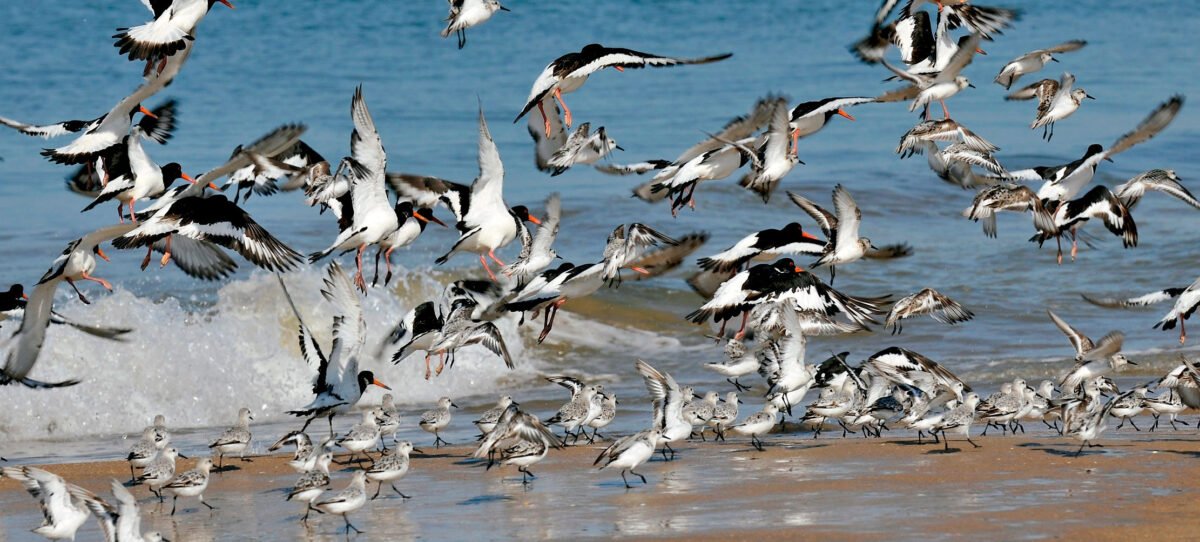
A variety of small plants can be seen, which have managed to adapt to the extreme conditions of this area, resisting constant winds and drought conditions. Examples include the barrón, a pioneer in the colonization of sandy soils, and the camarina, a species exclusive to the Atlantic coast of the peninsula that has a small white fruit known as the pearl of the dunes. or other more exclusive species such as the toadflax, as well as scattered pine, juniper, and savin trees. The presence of animals is evident from the tracks they leave in the sand, and from the cliff you can see terns, gulls, plovers, and sandpipers running along the beach.

Numerous species have strategies for surviving the Peñuelas fire that took place in 2017, such as regrowth and the production of resistant seeds. Thus, although the situation is extremely fragile, with the help of restoration efforts, much of the native vegetation of Asperillo is recovering.

Almonte