




Almonte is one of the municipalities with the most important natural environment in Europe, with the Doñana National Park as the emblem and jewel of this environmental wealth. In addition, architecturally it has a rich artistic heritage that is highlighted in this route, which will allow you to discover the details of its most distinctive buildings.
Category: Almonte
Rutas de las Torres Almenara
These defensive structures scattered along the coast of Huelva not only form a tangible legacy of the military constructions of the period, but are also authentic tourist attractions, such as Torre La Higuera in Matalascañas.
Visitors can learn about the history of this seafaring land and soak up the beauty of its coastline, contemplating environmental treasures such as Doñana and its 30 kilometres of unspoilt beaches.
The watchtowers that wind their way through our province bear witness to its fascinating history. It was Philip II who, in the 16th century, fortified the coast to protect it from attacks by Barbary pirates and invasions by Islamic peoples.
Rutas culturales
Sendero Paseo Marismeño
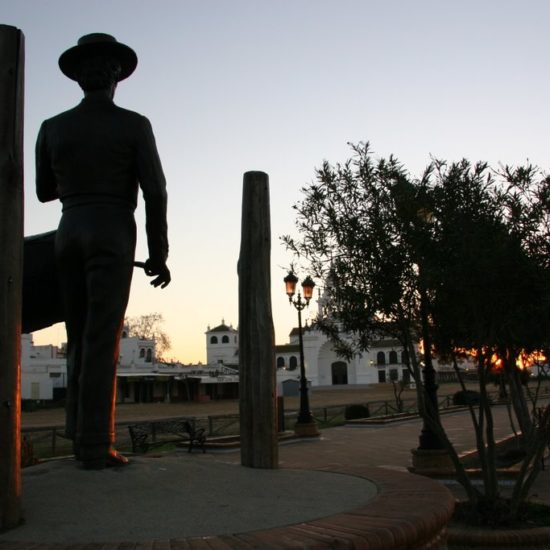
The surroundings of the walk, in the heart of the village of El Rocío, are spectacular, as it is located next to the marshes and you can see horses and foals all year round, as well as spoonbills, flamingos, glossy ibises and herons. It is a must for birdwatchers and nature lovers, and for watching a wonderful sunset.
At the marsh viewpoint, there is a tribute to the figure of the drummer, an indispensable character in the Romería del Rocío pilgrimage, with a life-size representation of him playing the flute and drum, dressed in the classic rociero costume and wide-brimmed hat. The sculpture is by José Manuel Díaz Cerpa.
This walkway connects to the Votive Chapel and the Sanctuary via a footbridge, so that it can be accessed by people with reduced mobility or in wheelchairs.
Sendero Lagunas del Huerto y las Pajas
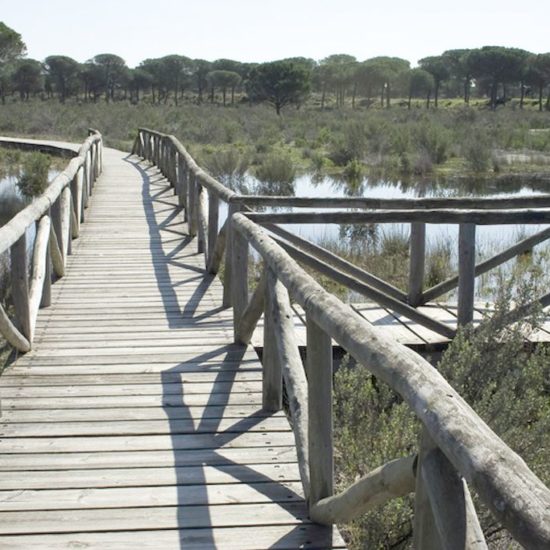
This 2.3 km trail, which is easy to walk, starts next to the last observatory on the left side of the Acebuche Lagoon trail. The Huerto and Pajas lagoons, together with other small temporary lagoons, form a complex that also includes the Acebuche lagoon and originates from the emergence of groundwater, as the water table is practically at the surface in this area.
The entire trail runs through the reserves, thick scrubland dotted with small groves of stone pine and scattered junipers, which provide an ideal habitat for small and large mammals. Although they are quite elusive, it is not difficult to find traces of deer, wild boar, mongoose, fox, badger… or perhaps even spot them in the thick scrub. The small pine forests also provide ideal nesting areas for various species such as red kites, booted eagles, common kestrels and azure-winged magpies.
The flora, which is greatly influenced by the level of flooding and therefore has a marked seasonal character, includes species such as bulrush, bayunco, cattail, buttercup, grass or millet, and the so-called marsiega. In the most exposed areas, other Mediterranean species appear, such as lavender, rosemary, and almoradú.
Sendero Laguna Ribetehilo
Ribetehilo (a row of riverbanks) marks the meeting point of two different geological substrates. This 2.4 km trail, which is easy to walk, runs along a wooden walkway and follows the boundary that was once a riverbed, barely recognisable today, where water finally came to the surface. This group of lagoons, accompanied by a sea of stone pines and white mountains, contrasts with the predominantly sandy landscape of the surrounding area. Cork oaks, strawberry trees and broom are replacing the eucalyptus trees with which the area was repopulated years ago.
Along this route there are explanatory signs on different topics of interest: the reforestation of eucalyptus and pine trees; peat and carnivorous plants; the strawberry tree and its fruits; the palm tree and its uses; the geological substrates and the colour of the sand; and the restoration of the landscape and its future vision, which can be seen little by little along much of the route. The linear trail runs directly over the sand until it reaches a footbridge that crosses the lagoon and allows you to enjoy one of these wetlands from within.
The comfortable wooden footbridge allows you to explore one of these lagoons, the Galápago, and the vegetation that today aims to restore the appearance of these lands as our ancestors knew them.
Sendero Laguna del Jaral
The Jaral lagoon is a large clearing in a pine forest. This trail requires considerable effort, as it runs through sandy terrain with uneven ground. However, the appeal of the contrasting landscape more than makes up for it. Starting from the road and the nearby lagoon area, we walk through pine forests planted in the mid-20th century to prevent the advance of the Asperillo dune, an impressive dune front that rises like a cliff overlooking the Atlantic Ocean.
The route allows you to enjoy the Asperillo dune and its cliff, declared a Natural Monument of Andalusia for its ecological and geological value.
Sendero Laguna del Acebuche
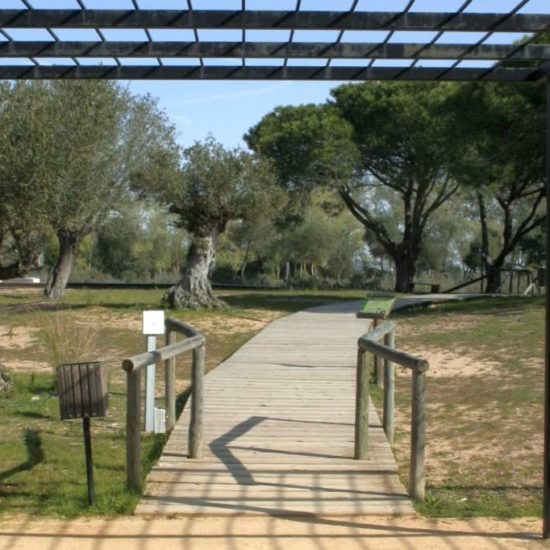
This 5.4 km route, which is easy to walk, runs parallel to the lagoon from which it takes its name and leads to various observatories from which you can discover the aquatic fauna that frequents these wetlands. Different species can be seen depending on the time of year. One of the most unusual species, which can be seen throughout the year, is the purple swamphen, a bird with intense blue plumage and long red legs that nests in wild olive trees.
In spring, it is easy to spot other resident or summer birds that also breed in the lagoon, perhaps with their chicks: mallards, common pochards, little grebes, great crested grebes and black-necked grebes, among others. During the autumn and winter months, it is possible to spot wintering species that arrive from the north in search of milder climates: gadwalls, wigeons, red-crested pochards…
The wildlife that can be seen is in the wild, so you may need to concentrate all your attention to spot it. Discovering the birdlife of the lagoon will require paying attention to the movements of the vegetation, sounds and songs, changes in shapes and colours…
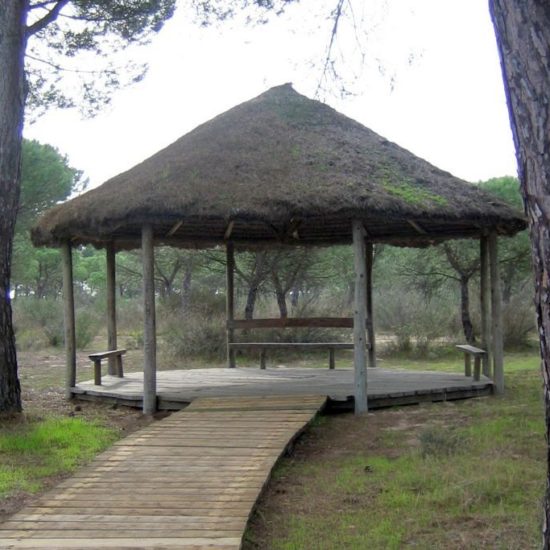
The trail runs along wooden boardwalks, which adapt to the terrain and make the route comfortable and safe. There are no slopes to negotiate, as the entire trail is practically at the same altitude. From the boardwalks, you can access some cabins, which serve as viewpoints and have observation posts at a lower height.
The trail ends by retracing our steps back to the visitor centre, where the route ends. At the start of the route, before entering the El Acebuche Visitor Centre, and accessible via a small adapted ramp that overcomes a 5 cm difference in level, there are adapted public toilets.
Along the trail, there are various elements that refer to traditional uses, some of which have now disappeared, that the inhabitants of the area made of the resources offered by the territory. Also pay attention to the construction type of the observatories; in the past, huts similar to these, built with palustre vegetation, were the usual dwellings of many workers and their families.
Sendero Dunar
This enclave is the most important system of living or mobile dunes remaining on the Iberian Peninsula and offers one of the most spectacular landscapes in Doñana National Park.
The dune system stretches for 25 km parallel to the coastline and is between 500 and 5,000 metres wide, reaching a height of 40 metres at Cerro de los Ánsares, the most emblematic shifting dune in the National Park.
Along the route there are different subsystems: from the embryonic dune areas at the edge of the beach to the first corral where large trees already appear. The walk ends at the beach, flanked by reddish cliffs at the foot of which the fine white sands stretch out.
Sendero Cuesta Maneli
The Médano del Asperillo trail, the highest natural viewpoint in the Doñana area, offers a unique landscape. From its start next to the dunes to its descent towards the sea, it reveals flora and fauna adapted to extreme conditions. Foxes, rabbits and even the elusive Iberian lynx inhabit this ecosystem, which is also rich in invertebrates and reptiles. The influence of the sea is evident on the coast, where plants such as sea lavender and sea lotus resist the ‘spray effect’, the effect of air and salt on them.
Stories of Roman settlements and tuna traps are intertwined with its summer past and its present as a protected area, promoting research and responsible enjoyment of nature.