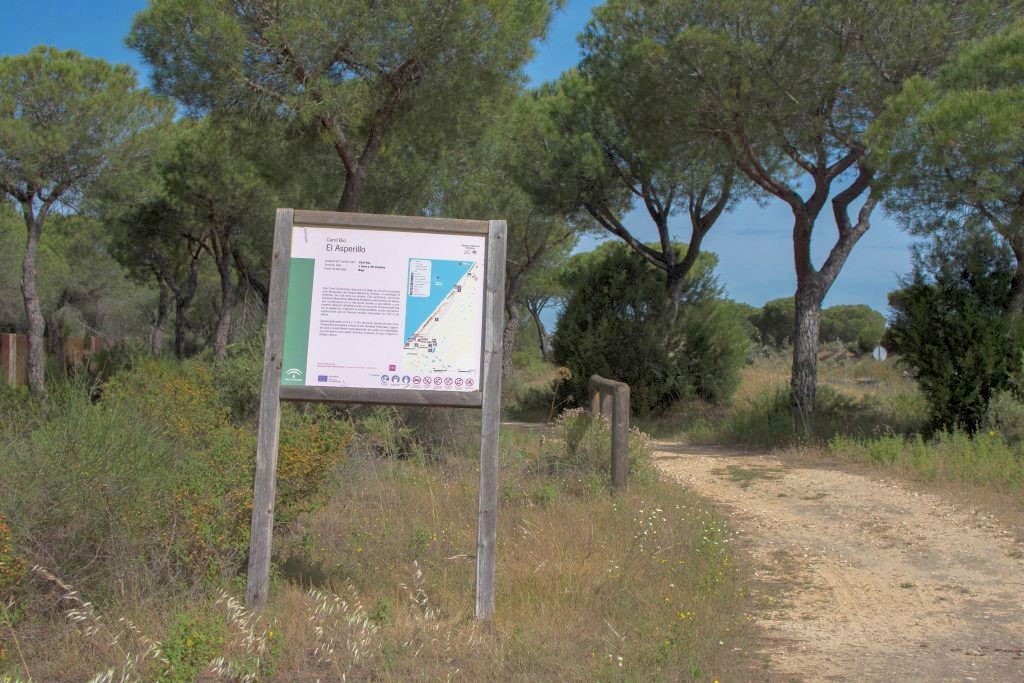




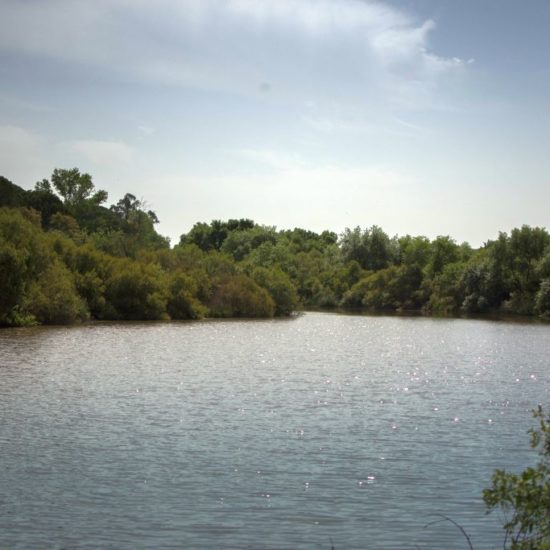
Next to the Acebrón Palace, built in 1961 by Luis Espinosa Fontdevila, begins the 2.1 km low-difficulty footpath that enters the protected area and brings visitors closer to scenes that, year after year and century after century, have distinguished these forests. During spring and summer, the forest is at its most splendid. After flowering, which occurs between December and April, the new leaves form a green canopy that closes off the space, creating a shady environment. Large ash trees flank the entrance, standing on the bank, very close to the water. The ash grove occupies dark soils that are rarely flooded but always remain cool. These large trees, with compound leaves and rough trunks, have been intensively exploited since ancient times.
Next, occupying almost the entire riverbed, is the willow grove. The footbridge allows visitors to see up close willows, locally called Zaos, and dogwoods, a species endemic to western Andalusia representative of Tertiary flora that survives in these cool, humid areas. Along with them, various climbing species: honeysuckle, wild grapevine and sarsaparilla form a compact mass of vegetation where countless small birds hide.
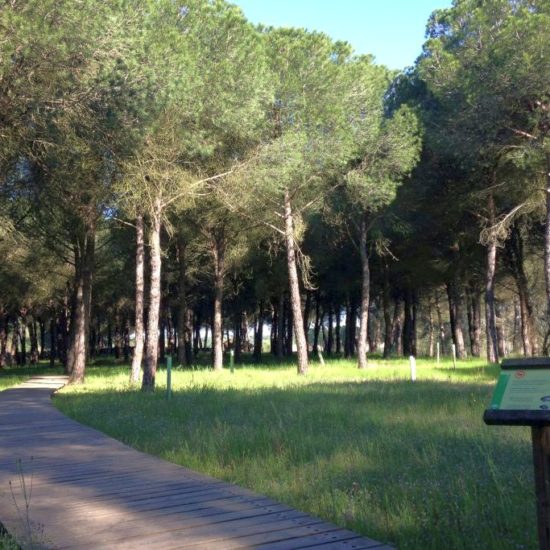
Beyond the riverside forest lies a pine forest of stone pines. This drier, higher terrain was occupied decades ago by eucalyptus plantations. Today, following the removal of exotic species, the native vegetation has been restored. Various woody species such as hawthorn, rosemary, mastic, rockrose, Moorish rockrose, gorse and spurge form the undergrowth of the pine forest and continue to gradually colonise the territory.
The trail enters the riverside forest again to cross the stream. Before leaving this second footbridge, interesting species of ferns such as royal fern and Thelypteris palustris can be seen under the willows. Behind them, the cork oak forest appears. Here the soil is dark and rich and accumulates abundant organic matter. In these more sheltered areas, peat bogs form, valuable and extremely fragile biotopes that are home to very rare plant communities characterised by the presence of ciliate berzo, dwarf gorse and numerous herbaceous species from humid environments. In the last section of the trail, several tributaries of the stream, known locally as algaidas, have a high density of vegetation with species such as sedge, cattail and masiega, among others. Alongside these algaidas are numerous specimens of white poplars that will accompany you until the end of the trail.