

Visita 360

Ruta Haciendas de Chucena

This is perhaps the easiest route in the county. So if you are thinking of going for a walk with family or friends, combining it with entertaining conversation, this may be a good choice. Don’t think that because it is easy it deserves less attention, as it runs through the beautiful countryside of the county of Huelva.
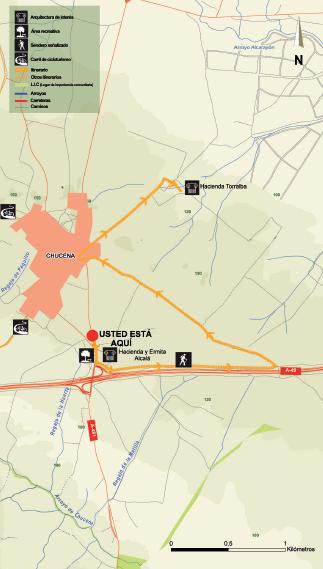
It starts at the esplanade where the pilgrimage of San Isidro Labrador is currently held. Here you will find the chapel of La Divina Pastora or Templo de Alcalá. This building dates back to the late 18th century, although it has undergone several modifications over time. Today it is one of the hallmarks of the municipality.

To begin, take the path that surrounds the Hacienda Alcalá-Alameda. This hacienda, together with the chapel, is the only visible remnant that survives today of the disappeared village of Alcalá de la Alameda, which was depopulated in the 19th century. It consists of two joint haciendas. The current view is of a building, in the style of an Andalusian farmhouse, which still preserves the old 18th-century oil mills. In one of them, the tower of the oil mill still stands, which, as was customary in these rural constructions, was located at one end of the rectangular floor plan.

Once you have passed the estate, continue along the road parallel to the motorway. At km 1.8, turn left onto the road to the port, which leads directly to the town centre. Take care here, as you will have to turn right and drive 50 metres along the A-481. When you reach the intersection with Calle Torralba, turn right again and follow the road that leads to Hacienda Torralba.

The origins of this building date back to the Middle Ages, although it was in the 18th century that it took on its current name. The main building features typical Andalusian architecture and also has details that give an idea of its age, which is difficult to date, such as the watchtower and the pool, both of which are possibly Arab in origin. The different rooms are arranged around a large central courtyard.
Romería de San Isidro Labrador y la Divina Pastora

With the arrival of spring, Chucena fills with joy and tradition with the celebration of its pilgrimage in honour of the Divina Pastora and San Isidro Labrador, an event eagerly awaited by the residents of the municipality. What was originally a simple day of conviviality in the countryside has, over time, become a deeply rooted festival, similar in atmosphere and dynamism to a popular fair.

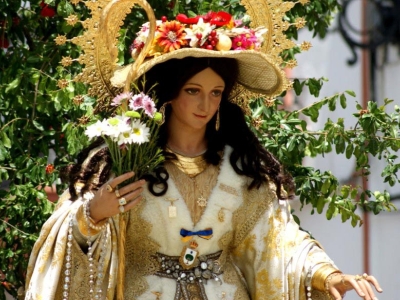
The history of this pilgrimage dates back to the late 1950s, when the Capuchin friar Fray Jacinto de Chucena promoted the restoration of the old Church of Alcalá, located on the outskirts of the municipality. With the aim of revitalising Marian devotion in the area, he commissioned an image of the Divina Pastora to organise a pilgrimage in her honour. At the same time, an image of San Isidro Labrador, patron saint of farmers and symbol of work in the fields, arrived in Chucena.

The first pilgrimage took place in 1959 and, since then, it has been celebrated annually with outstanding popular participation, becoming a cultural and religious reference point for the municipality.

During the pilgrimage, the residents travel to the chapel in decorated carts, on foot or on horseback, accompanying the images in a festive atmosphere full of emotion, music and traditions. The conviviality, local cuisine and devotion intertwine to form one of the most unique celebrations of spring in Chucena.
It is worth noting that in 2010, the image of the Divina Pastora was the star of an extraordinary procession to mark the 50th anniversary of its arrival in Chucena, reinforcing the spiritual and emotional bond between the image and the town.

Las Chapas

The game of chapas is a deeply rooted tradition in Chucena, especially during Holy Week. Every Maundy Thursday, locals and visitors gather in bars and public spaces to participate in this game of chance that has endured for centuries.

The game involves tossing two old coins, commonly known as ‘perras gordas’ (10-cent copper coins from 1879), which have a cross or an X painted on one side. Participants bet money on the outcome of the toss: if both coins show the same side (two heads or two tails), the winner is determined. If one coin shows heads and the other tails, the toss is repeated until a matching result is obtained.

The game is organised around a ‘circle’, led by a ‘baratero’, who acts as the bank and is responsible for maintaining order and managing the bets. The baratero must match the players’ bets, which can result in considerable sums of money being wagered. Despite the high stakes, the atmosphere is usually festive and relaxed.

Although the exact origin of the game is uncertain, it is believed to have roots in Roman times. One of the most widespread theories is that Roman soldiers gambled for Jesus Christ’s tunic by tossing a coin, linking this tradition to Holy Week. During Franco’s dictatorship, the game was banned, but its practice was tolerated during Holy Week. Today, although it is neither officially authorised nor prohibited, it is allowed to be played in Chucena on Maundy Thursday, as it is considered a cultural and festive event in the town.

Thus, the game of chapas in Chucena is a centuries-old custom that combines chance, tradition and community, and is one of the most unique cultural expressions of Holy Week in the province of Huelva.

La Fritá

Chucena’s festive calendar kicks off every year in February with a celebration that combines gastronomy, landscape and conviviality: La Fritá. This country day is organised by the Hermandad del Rocío de Chucena as a charity event to raise funds, and has become one of the most eagerly awaited events for the town’s residents.

La Fritá takes place in the natural setting of the Dehesa del Perú, an enclave of great ecological value populated by holm oaks and cork oaks, which offers an ubeatable environment for enjoying the outdoors, nature and good company.

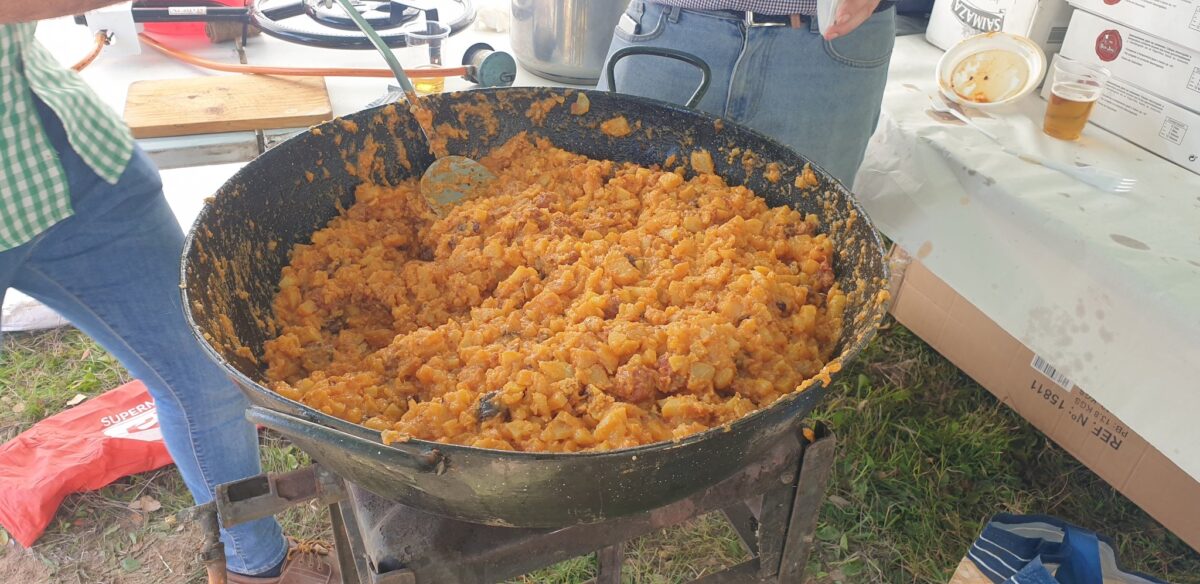
In this festive and welcoming atmosphere, traditional dishes are prepared and shared around a communal frying pan, as tradition dictates. The popular expression ‘in Chucena we throw a party even for a bunch of vine shoots’ perfectly sums up the cheerful, hospitable and festive nature of its people, who are capable of turning any occasion into a cause for celebration.

La Fritá is not just a gastronomic event. It is also an act of local identity, in which solidarity, popular culture and the connection with the environment come together to create an unforgettable day.

Fiestas Patronales de la Virgen de la Estrella

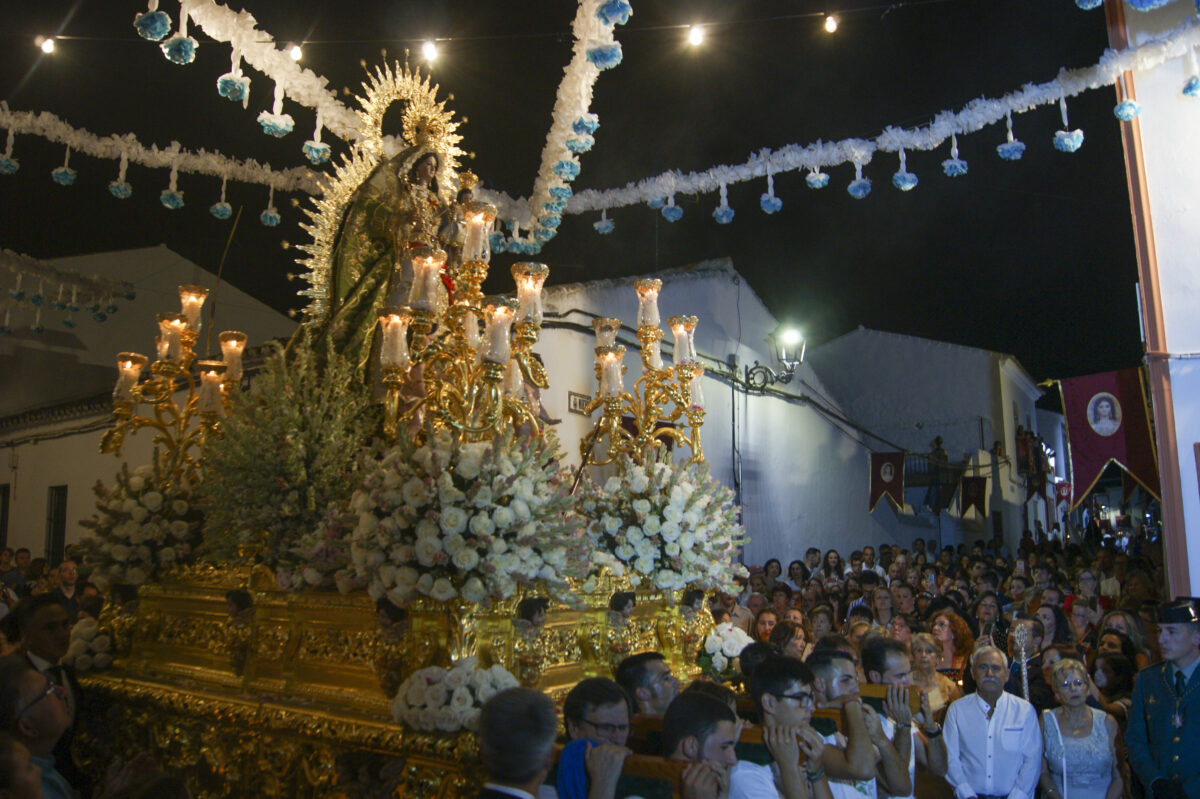
Every year, between 14 and 17 August, Chucena celebrates its Fiesta Grande in honour of the Virgen de la Estrella, patron saint of the municipality. These festive days, which take place in the central squares of Andalucía and La Iglesia, are experienced with great intensity and neighbourhood participation, becoming a benchmark of identity and devotion for the town.

The programme of activities includes a wide range of recreational and cultural events for all ages. Highlights include children’s competitions and family activities, sports competitions, musical and artistic performances, horse races, candy showers, water trucks to cool off the summer heat, and the fire bull, a much-anticipated tradition during the festive nights.

All this takes place in a carefully decorated setting, where the conviviality, joy and warmth of August give shape to one of the most endearing festivals in the region.

The most solemn and emotional moment of the festivities takes place on the night of 15 August, when the image of the Virgin of the Star is carried in procession through each and every street of the municipality. Accompanied by her devotees and the music of the bands, the Virgin walks among the fervent crowd until well into the early hours of the morning, marking a spiritual and collective milestone in the life of the town.

Feria del Vino

The Chucena Wine Fair is one of the most important events in the wine sector in the province of Huelva and takes place every November to coincide with the end of the grape harvest. This famous fair was created with the aim of promoting the rich wine culture of Chucena and making it known beyond the municipality and the region.

Wine in Chucena is a key element of its tourist offering, present in its heritage, history, culture, landscape and gastronomy, which is why it has become a must-see event for lovers of wines from the County of Huelva.

The fair has a large shopping and exhibition area, as well as a packed programme of activities to enjoy a unique weekend. Activities include musical and comedy performances, parades, tastings and pairings, workshops and children’s activities.

The Chucena Wine Fair is an opportunity to discover and enjoy the municipality’s wine-making tradition in a festive and welcoming atmosphere that reflects the identity and spirit of the Chucena community.

Corpus Christi

The Corpus Christi celebration in Chucena is one of the most emblematic and deeply rooted festivities in the municipality, where faith and tradition are manifested in a collective expression of devotion and ephemeral art.

Every year in June, the streets of Chucena are transformed into a scene of solemnity and beauty. The residents throw themselves into decorating the procession route, adorning the streets with branches of eucalyptus, rosemary and sedges, which fill the air with their characteristic aromas. Balconies are decorated with shawls and hangings, and popular altars, known as ‘cordeles’, are erected, reflecting the care and creativity of the community.

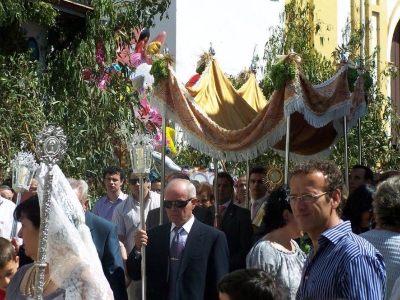
The procession of the Blessed Sacrament, carried in a canopy, travels through the streets accompanied by the various local brotherhoods and associations, as well as a band that enhances the festive and spiritual nature of the event. Of particular note is the participation of the boys and girls who have received their First Communion, who, dressed in their finery, form part of the procession, symbolising the continuity of faith in the new generations.

In the past, the Corpus Christi festival in Chucena was extended with the celebration of the ‘Octava’, a second day of festivities that took place eight days after Corpus Christi. Although this tradition has fallen into disuse, it remains in the collective memory as a testimony to the cultural and religious wealth of the municipality.

The organisation of the liturgical and processional events is carried out by the Sacramental Brotherhood of Nuestra Señora de la Estrella, which, together with the collaboration of the Town Council and the active participation of the residents, guarantees the continuity of this celebration, which constitutes a true intangible heritage of Chucena.

Dia de todos los Santos

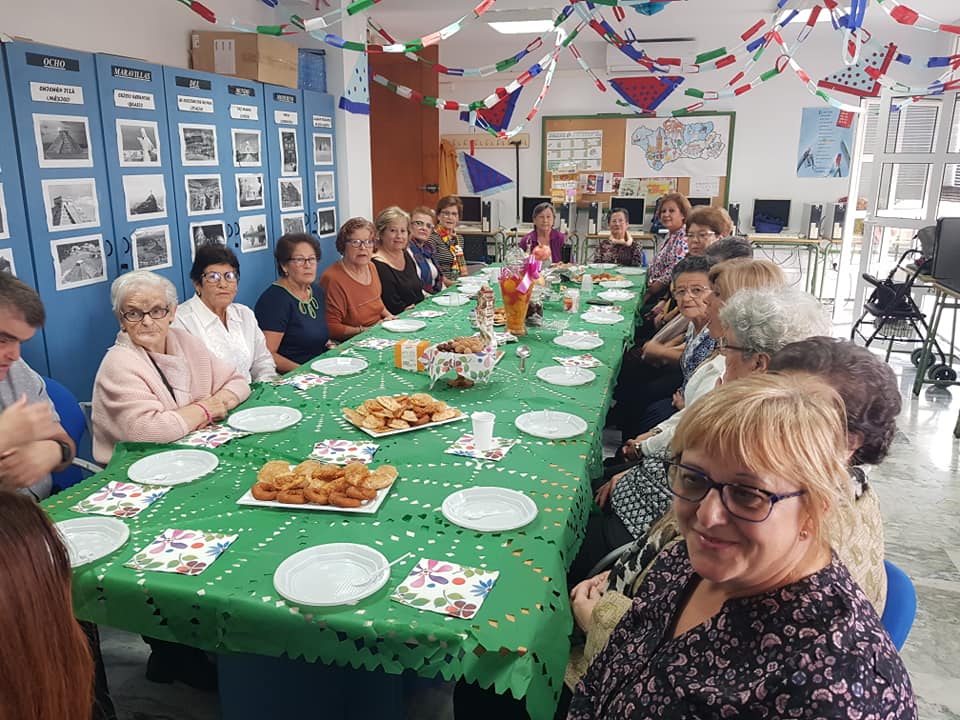
Every 1st of November, with the arrival of the first cold spells, Chucena celebrates one of its most cherished and eagerly awaited festivals: the Mesa de Tosantos. This tradition, deeply rooted in the life of the municipality, brings together residents of all ages in an atmosphere of fraternity, flavour and collective memory.

From the beginning of October, groups of friends and families—popularly known as ‘pandillas’—enthusiastically organise themselves to find a suitable venue to celebrate this special day. The preparation of the table becomes a real ritual, passed down from grandparents to grandchildren, in which every detail counts.

The decoration is handmade and very carefully crafted: the walls of the venue are adorned with colourful tissue paper chains, while the tables are covered with hand-cut tablecloths, imitating the motifs of traditional table linen. On top of them, a rich variety of seasonal products and homemade sweets are lovingly displayed, forming an authentic gastronomic puzzle full of aromas, colours and memories.

There are soft drinks for the little ones, sweet wine for the grown-ups and an exquisite collection of local pastries: harvest sweets, such as correones, arrope or the original espoleá de mosto; and other typical local sweets, such as fried rosquitos, abuelas, gañotes, canelones or honey and sugar roses.

The feast is rounded off with autumn fruits, including roasted chestnuts, sweet potatoes, pomegranates and gamboas (quince).
The Mesa de Tosantos is a celebration that goes beyond gastronomy: it is an expression of conviviality, of caring for our heritage and local identity. A day to get together, share and welcome winter with traditional flavours and the joy of being together.

Templo de Alcalá de la Alameda

The Ermita de la Divina Pastora, also known as the Templo de Alcalá de la Alameda, is a notable example of Chucena’s historical and religious heritage. Its origins date back to the 15th century, when it was built as the Parish Church of the Immaculate Conception and Saint Anne in the village of Alcalá de la Alameda, according to the 1411 White Book of Seville Cathedral.

The current building was constructed between 1773 and 1781 by the master builder of the Archbishopric of Seville, Ambrosio de Figueroa, and his son. This new church, smaller than its predecessor, was necessary due to the damage suffered in the Lisbon earthquake of 1755.

With the progressive depopulation of Alcalá de la Alameda in the 19th century, the temple fell into disuse and disrepair. In 1779, its dilapidated state necessitated immediate renovation, which was completed in 1781, giving it its current Baroque and Renaissance style.

Between 1957 and 1958, it underwent further restoration thanks to the key figure of Fray Jacinto de Chucena, a Capuchin friar from the town. Faced with an ultimatum from the then Bishop of Huelva, D. Cantero Cuadrado, to sell the building if it was not restored, he decided to undertake the difficult task. To this end, he was helped by all the inhabitants of the municipality, who, with their money or their labour, contributed to the successful restoration of the Ermita de la Divina Pastora. This is what makes the people of Chucena so proud of this temple.

The remains of Fray Jacinto de Chucena have rested, deservedly, in the temple since 1 April 1973, in accordance with the express wishes of the people. In 2001, a statue was erected in his honour outside the building. Since then, the temple has been dedicated to the Divina Pastora, although it officially retains its former dedication.

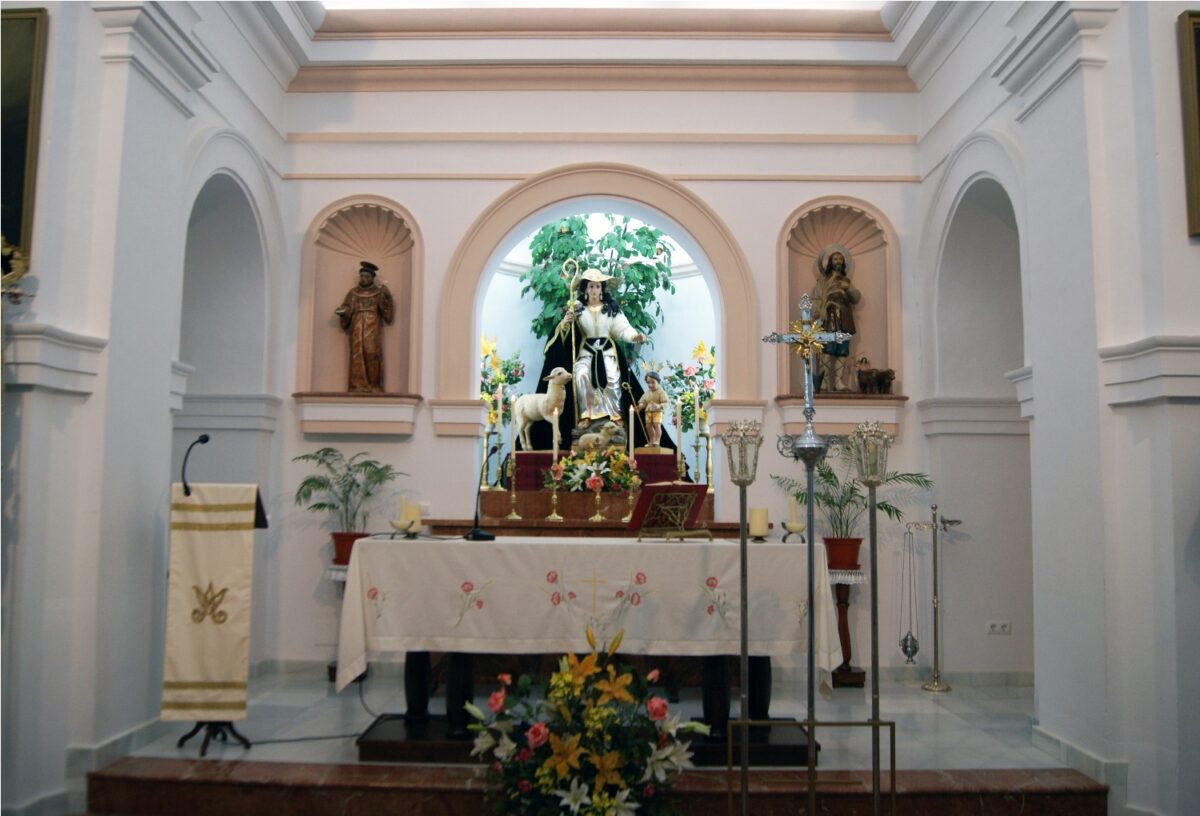
The chapel is presided over by an image of the Divina Pastora, sculpted by Juan Martínez Cerrillo in 1960. The temple has a single nave with a transept, a main chapel and a sacristy. The main body is covered with a gabled roof, the transept with a hipped roof and the main chapel with a three-sided roof, all with curved tiles. In the side chapels there are paintings of religious themes in a popular style. The main façade, at the foot of the church, consists of a semicircular arch flanked by bent and recessed pilasters, which support an entablature with a bent and split triangular pediment, on whose sides there are two jars. In the centre is an oculus inscribed in a moulded frame with lugs and a mixtilinear crest, which connects to the pendant located under the upper vertex of the façade. The lower part has two semicircular arches between three pilasters supporting an entablature decorated with triglyphs and a split pediment. The upper section is similar to the lower one, but with a single opening with a bell and a curved pediment, topped with a wrought-iron cross between two vases of lilies. Its single nave is covered with a barrel vault on five transverse arches with pendants. The transept has a half-orange dome on pendentives in the centre. In front of the church is a square with a monument in homage and memory of the Capuchin friar who did so much for this town.

The Ermita de la Divina Pastora is a symbol of the faith and perseverance of the inhabitants of Chucena, and a living testimony to their historical and cultural heritage.

La Cruz Chiquita

This humble monument remains as a possible silent witness to a primitive settlement.

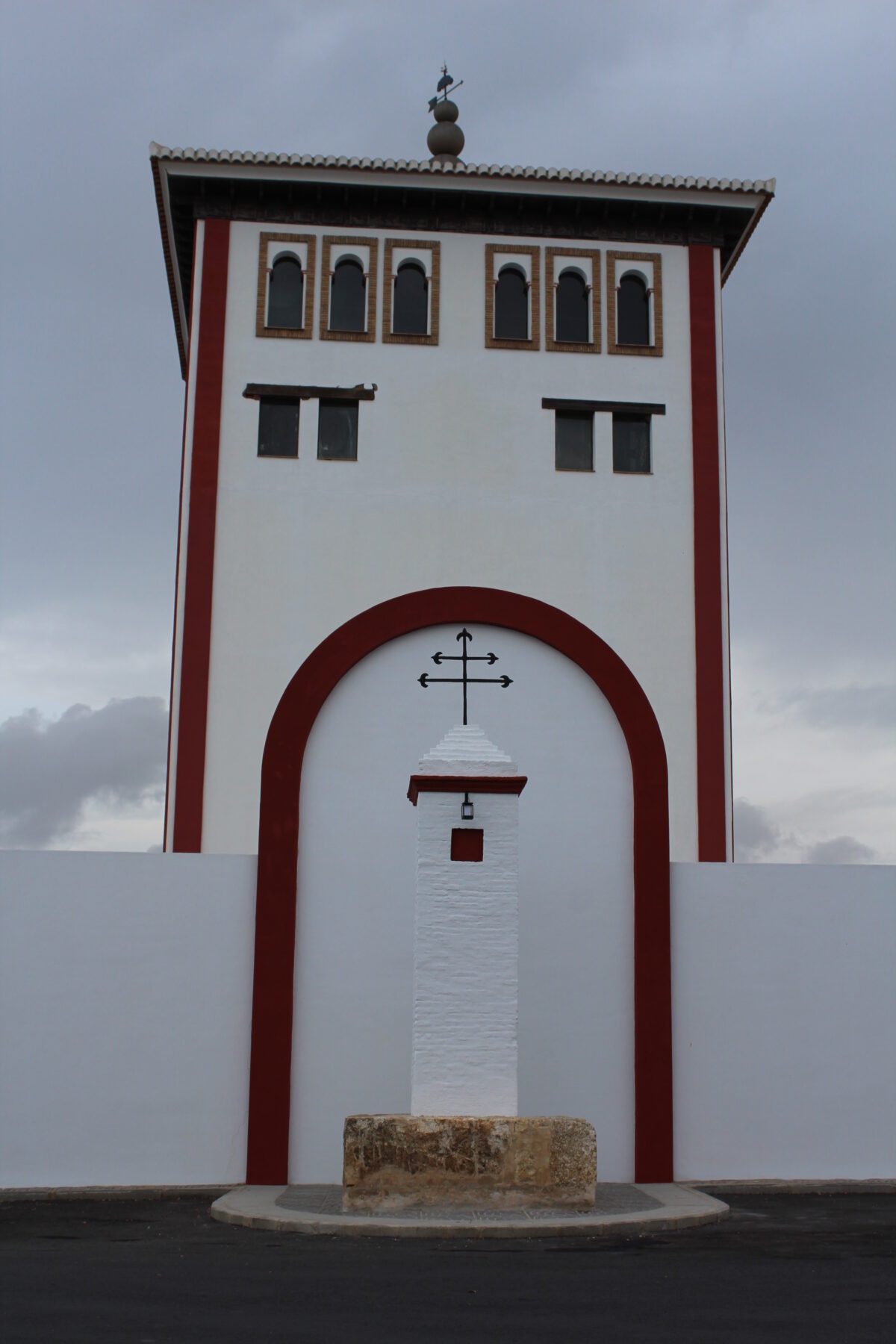
A brick pillar rises above rustic stone masonry, featuring a small tile that is now completely illegible, topped by a simple Caravaca cross.

Its very name may indicate the existence of another larger cross, of which there is no record. We could consider this cross to be a sacred place, as was very common in the Middle Ages, perhaps because it was a crossroads or place of pilgrimage, an oratory, or a suitable site for the celebration of various religious acts.

Unfortunately, this only vestige of 13th-century Chucena has been heavily altered in later centuries. The upper stepped pyramid, the tile itself, and the davit with lantern and cheek plate are proof of this.

In addition, just behind this simple monument, surrounding the water tank installed in previous decades, a new building has been erected, with elements from the historical past, which will also house a viewing area, so that visitors can contemplate the vineyards and other natural areas from the highest point in the municipality, as well as enjoy another view of the town.