


Visita 360

Museo Tesoro de la Virgen del Rocío

This museum is located in the galleries of the Sanctuary of the Patron Saint of Almonte. Its rooms and display cases serve to preserve and exhibit some of the historical and artistic heritage of the Hermandad Matriz de Nuestra Señora del Rocío (Brotherhood of Our Lady of El Rocío) in order to understand the more than seven centuries of documented history of devotion to the Virgin.

The oldest pieces on display are a tile panel dating from 1696, the only surviving piece from the original 13th-century religious building, and the Corona del Sol, the oldest piece of gold and silverwork in the Blanca Paloma’s trousseau, dating from the 17th century.

A selection of pictorial votive offerings, two complete costumes, and the crown with which the Virgin of El Rocío was canonically crowned on 8 June 1919 are some of the pieces that occupy the other display cases, in addition to the trousseau used for the transfers (skirt, cape, dust coat, hats and cloths), documents, and gold and silverwork, as well as a processional float of the Queen of the Marshes, donated in 1933, complete the exhibition space.

The visit culminates with the screening of a summary of the film Rocío. Reina y Madre de Andalucía (Rocío. Queen and Mother of Andalusia) in an intimate space offering a privileged view of the natural surroundings of Doñana, which helps us to understand one of the most pronounced expressions of devotion to the Virgin of Rocío, that of Queen of the Marshes.

The Pilgrim’s Office is located in the same premises. It provides a service for pilgrims, institutions and brotherhoods who wish to participate in the religious and cultural experience of El Rocío, and is a support tool for all those who seek a religious experience in El Rocío, whether travelling individually or in groups. The procedures that can be carried out at the Pilgrim’s Office include: scheduling a pilgrimage, mass, floral offering or other event related to the Sanctuary, requesting Plenary Indulgence, sales of books, DVDs and pilgrim credentials to Santiago, among others.

Museo Forestal de Almonte

Located at kilometre eight of the Almonte – El Rocío road, this is a forest of high ecological value, covering 60 hectares of pine forest where visitors can connect with the natural environment. Its contents are linked to the traditional uses and work carried out in the forest.

Iberian Lynx Interpretation Centre
The Lynx Interpretation Centre provides an in-depth look at this animal, from its morphological characteristics and life cycle to the different species belonging to the Lynx genus. The tour offers a close-up and realistic view of this species so that visitors can discover its unique features, as well as the threats and dangers that lurk.

The tour is organised around six rooms. Each one offers a theme related to this enigmatic animal, which visitors will gradually discover through audiovisuals, graphics, texts and dioramas. The rooms bring together information on the following topics: the lynx around the world, its habitat, the Iberian lynx as prince of Doñana, the lynx explained to children, and an audiovisual area. In short, it covers the scientific aspects, monitoring and the need to conserve it for future generations. The centre’s surroundings serve as a complementary visit, as they are a perfect example of the natural environment in which the feline lives.

Stone Pine Interpretation Centre
The Stone Pine Interpretation Centre allows visitors to explore the inside of a giant pine trunk. The space is divided into four sections that use models, panels and audiovisuals to explain the stone pine, the fauna and flora of the pine forest, and the sustainable use that humans have made of it.

Farm School
Nature and the classroom come together on the farm. A special residence where sheep, peacocks, chickens, goats and other animals live together. In the mare and deer enclosures, children can enjoy the wildest natural habitat in Doñana.

Adventure Park
One of the most innovative activities in active tourism. It consists of 162 structures suspended 8 metres above the ground with rope bridges, spider webs, rings, balance bars and a large slide.

Museo del Vino

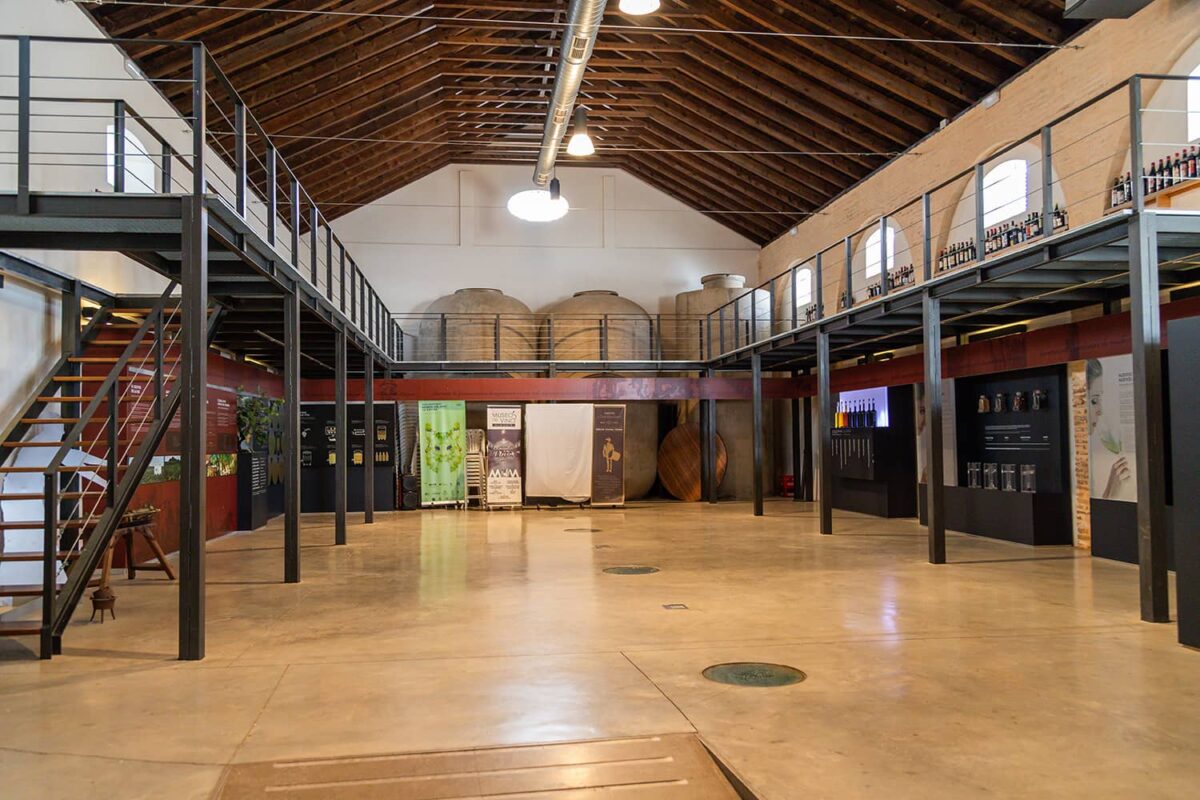
The Almonte Wine Museum is a space dedicated to promoting and disseminating the long wine-making tradition of the Almonte region. It is a place where visitors can learn about the history and production of the region’s wines and an encounter with wine, where wine is the true protagonist and the common thread that accompanies visitors throughout the exhibition. The museum, covering 1,000 square metres, offers an itinerary organised into different thematic areas dedicated to showcasing the various aspects that make up wine culture.

An educational and interactive journey to the essence of wine in a space that enhances the senses. The smell of must that permeates the building, evocative images that transport visitors to the old wine press of the winery, the aroma of the wines and the opportunity to taste them during the visit are some of the attractions of this enclave.

Located on a late 19th-century winery complex, the Wine Museum has become one of the most emblematic buildings in Almonte.

The Wine Museum welcomes visitors in a central courtyard where carts and animals laden with freshly cut vines from the fields used to enter. A spectacular scenographic setting transports visitors to the old wine press of the winery where, through a series of original pieces, such as concrete vats where wine was once stored, the early stages of wine production are shown: how the grapes were trodden and the press used to extract the first must. A cellar with American oak vats shows us the place where the mothers that gave body and character to the new wines were stored. The visit will also show the process of growing grapes throughout the four seasons of the year and the star of our vineyards, the Zalema grape. The colour of the grape and the maceration time determine the shades of the Almonte wines, which in turn give off different aromas: bitter orange, liquorice, vanilla… resulting in different wine productions. Visitors can enjoy all this through tastings, audiovisuals and interactive systems. Without a doubt, a pleasure for the senses.

Museo de la Villa

The Historical Museum of the Town of Almonte is located in an old 18th-century oil mill known as Molino de Cepeda. It showcases aspects of the municipality’s traditional culture, highlighting Almonte’s connection to Doñana National Park. It showcases the rich natural and cultural heritage of this municipality; various graphic and audiovisual elements reflect the presence of the customs and trades that have historically developed in Almonte, its ephemeral cathedrals… all of this integrated into a building that still retains part of the original machinery of the mill that once stood there, as well as the pits and jars where the oil was stored.

Centro Cultural de la Villa

It is a new building constructed in the style of an old chapel dedicated to St James the Apostle, founded in the 15th century, which, according to history, stood on the site where it has been built.

This building houses the headquarters and offices of:
– Almonte Foundation for Bibliophilia and Art (FABA).
– Culture for Tolerance Foundation.

The Cultural Centre of the Town’s heritage includes out-of-print books and 18th-century plans. The Cultural Centre of the Town coordinates activities with universities and holds conferences on various topics (history, anthropology, social sciences, etc.).

For its part, the FABA also has an important art gallery and around 2,000 volumes in its library, including out-of-print, rare and curious books.

Centro de visitantes de la Rocina

La Rociana is near the village of El Rocío, on the lower course of the stream of the same name. This centre serves as the starting point for an interesting trail that runs along part of the stream and aims to explain the plant formations found there, such as pine forests, fern groves, heaths, brambles and reed beds, as well as the typical vegetation of the white mountains, mainly consisting of rockroses and aromatic scrub such as lavender, rosemary and thyme. In addition to explaining these plant formations, the visitor centre showcases the fauna present in them, where migratory and aquatic birds abound, such as the bulky greylag goose, the striking purple swamphen and the endangered squacco heron.

Centro de visitantes del Acebrón

El Acebrón is an old palace-house, built in the second half of the 20th century, which has subsequently been adapted for the dissemination and promotion of the ethnographic heritage of the Doñana National Park. The exhibition Doñana y el hombre (Doñana and Man) offers visitors the opportunity to learn about various aspects and peculiarities of the relationship between the locals and their natural environment. It shows everything from what their huts or dwellings were like, built from plant materials found in the surrounding area, to the hierarchical organisation of the family. It delves into the harsh life in the marshes and the traditional trades that were carried out there, such as hunting, fishing and livestock farming. The exhibition also deals with the current evolution of other uses such as strawberry farming, tourism and hospitality. Of course, it does not forget deeply rooted traditions such as the Saca de las Yeguas (the gathering of the mares) or the world-famous Romería del Rocío pilgrimage.

Museo Harinera Santa Rosa

The Harinera Santa Rosa Ethnographic Museum is one of the most unique heritage sites in Hinojos and in all of western Andalusia. Located in an old mill, this museum offers a journey through the agricultural and cultural history of the municipality.

The Harinera Santa Rosa was the only mill in the County of Huelva that operated after the Spanish Civil War. In this system, the locals brought their wheat to be ground and, as payment, left a portion with the miller. This mill was founded in 1940 by Francisco Talavera Jerez and remained in operation until 1960. After its acquisition by the Town Council in 2006, it was restored and converted into a museum.

The museum is structured around five interrelated exhibition rooms, displaying more than 350 pieces donated by the residents of Huelva themselves. These rooms offer an educational insight into rural life, displaying farming implements, agricultural tools, domestic utensils and a room of miniatures. It also has a photographic exhibition documenting the threshing cycle.

The Santa Rosa Flour Mill is the only mill in western Andalusia that has remained intact and in perfect condition. Its original machinery and structure offer an authentic insight into the technology and agricultural practices of yesteryear.

The Santa Rosa Flour Mill Ethnographic Museum is a must-see for those who wish to learn about the history and traditions of Hinojos, offering a unique educational and cultural experience.

Observatorio del Lince Ibérico

The current Iberian Lynx observatory is located on the “Huerto y Pajas” footpath, next to the El Acebuche visitor center. On the way to the observatory, you can admire one of Doñana’s most representative landscapes, the “cotos,” formed by heterogeneous scrubland, dotted with small groves of stone pine trees and scattered junipers, wild olive trees, and cork oaks. This landscape is the ideal habitat for small and large mammals: rabbits, deer, fallow deer, wild boars, mongooses, foxes, badgers, and even Iberian lynxes. It also offers ideal nesting areas for various species such as the red kite, booted eagle, imperial eagle, kestrel, and azure-winged magpie, among many others.

The importance of conserving the habitat of the Iberian lynx, a species representative of this territory, has led to the development of Educational and Interpretation Programs, guided by specialized personnel, who walk the footpath and where it is possible to see several specimens of Iberian lynx from this observatory.

Visits to this observatory are free of charge, but advance booking is required. Reservations can be made at the El Acebuche Visitor Center itself, by calling 959 439 629, or through one of the authorized tour companies that include this visit in their range of services.

Centro ornitológico Francisco Bernis

This center is a must-see for all ornithologists and nature lovers visiting this unique area. Located here are the SEO/BirdLife offices in Doñana, which serves as the central hub for a wide variety of conservation, ringing, training, environmental education, and volunteering activities. From its spacious terraces, visitors can observe spoonbills, flamingos, glossy ibises, herons, thousands of waterfowl, and, very frequently, the rare Spanish imperial eagle. Thanks to the collaboration of Zeiss, the center provides visitors with high-end telescopes and binoculars. Furthermore, the center’s expert staff is available to provide the most specialized information on the birds of Doñana, the latest sightings of interest, rarities, and information on the best routes. Throughout the year, this center offers a diverse program of training courses, environmental education workshops, scientific ringing campaigns, talks, and volunteer days—activities in which anyone can participate.