

Visita 360

Fiestas de María Auxiliadora

The Feasts of Mary Help of Christians in La Palma del Condado are one of the most significant religious and cultural celebrations in the municipality, organised by the Archconfraternity of Mary Help of Christians in collaboration with the local Salesian community.

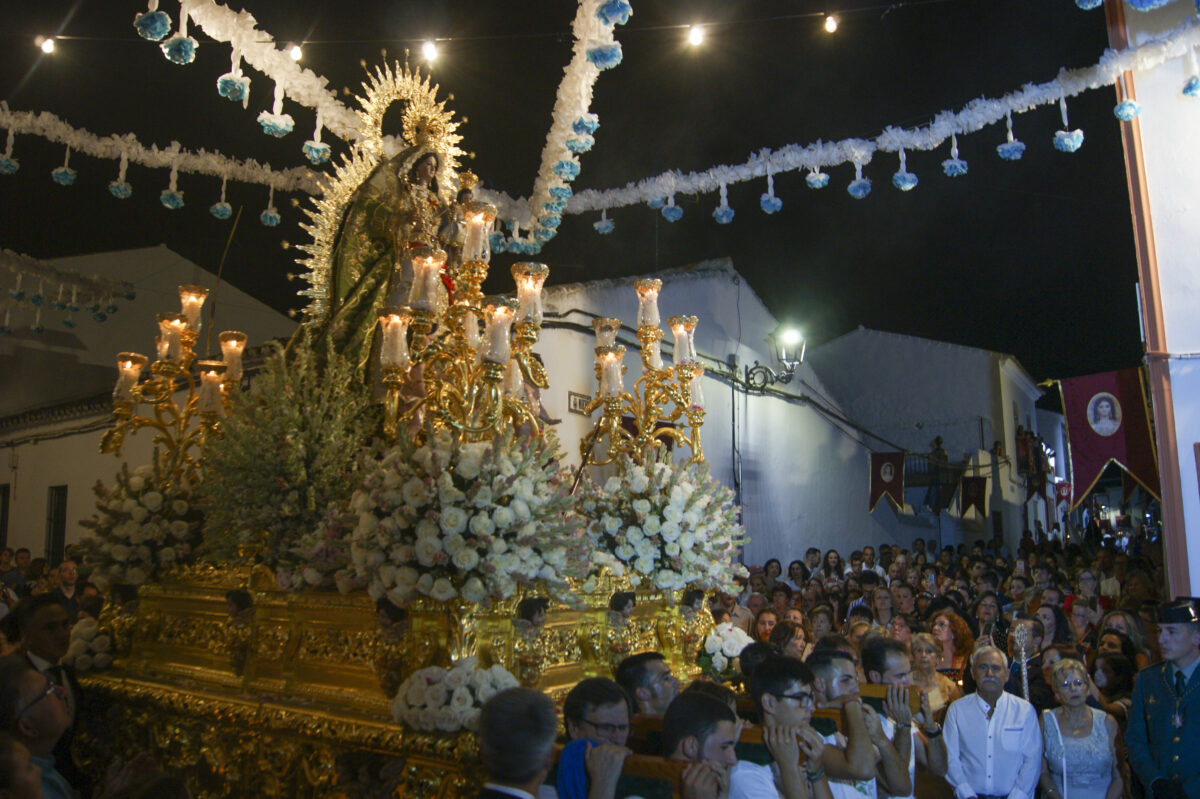
These festivities are held in the first half of June with the novena to María Auxiliadora in the Church of El Salvador. On the eighth day of the novena, the traditional descent of the Virgin from her altar is celebrated, during which the Marian Exaltation is pronounced each year, ending with the kissing of the hand of the Blessed Virgin. After the celebration of the last day of the Novena, the popular and traditional transfer of the Blessed Virgin to the Parish Church of San Juan Bautista takes place, along a route decorated with banners, paper flowers and arches, where the whole town accompanies the Blessed Virgin on a journey filled with petals and songs from the balconies of the houses.

Friday of the festivities is reserved for the Bando de Vísperas, when the Band of Our Father Jesus Nazarene parades through the streets where the procession of the Virgin will take place the following day, accompanied by numerous brothers, young people and children who, carrying banners and flags, announce the departure of the Virgin. This procession ends at the Salesian School with a Grand Festival in the courtyard.

Saturday dawns early in the Parish Church of San Juan Bautista, which opens its doors to the veneration of the Blessed Virgin so that she can be visited by all her devotees. In the afternoon, at 7:30 p.m., the Main Function is celebrated, after which the Virgin is carried in procession through the streets of the town.

In 2024, the Canonical Coronation of Mary Help of Christians was celebrated, a historic event that took place on 5 October in the Plaza de España. The ceremony was presided over by the Bishop of Huelva and featured an extraordinary procession through the main streets of the municipality, marking a milestone in local Marian devotion.
Fiestas de la Vendimia

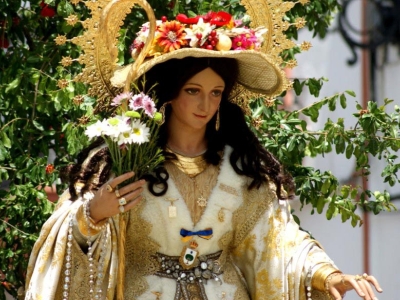
The La Palma del Condado Wine Harvest Festival is an iconic celebration that pays tribute to the wine-making tradition of the Huelva region. Declared a Festival of National Tourist Interest in Andalusia, this festival is held every September to coincide with the town’s Royal Fair, which has more than six centuries of history since King Henry III granted it the title of ‘Royal’ in 1398.

The main event of the festival is the ‘Birth of Wine’, a ceremony that takes place in the Plaza de España, the heart of the historic centre of La Palma del Condado. During this event, the Harvest Queen and her court of honour re-enact the transport of the grapes, their blessing before the local patron saint, Nuestra Señora de Guía, and the symbolic pressing that gives rise to the first must of the year.

The Harvest Festival combines tradition, art and culture in a festive atmosphere. In addition to the main event, there are activities such as the coronation of the Harvest Queen, the appointment of the Foreman of Honour and the speech by the Master of Ceremonies. Music, dance and local cuisine enrich the experience, making this festival a major tourist attraction.

The Harvest Festival in La Palma del Condado is a unique opportunity to immerse yourself in the wine culture of the Huelva region and enjoy a celebration that combines history, tradition and joy. An essential event for those who wish to discover the soul of this land and its people.

Festividad de la Cruz de la Calle Sevilla

La Palma del Condado is known for its deep devotion to its May Crosses, a tradition that dates back at least to the 19th century. At that time, neighbours and family members erected simple public crosses in the doorways and courtyards where they lived, decorating them with flowers and rosemary from the countryside. They celebrated this custom with music and folklore typical of the region, around 3 May, the date on which the Invention of the Holy Cross is commemorated.

The festival of the Cross of Calle Sevilla is celebrated during the first half of May. During these days, the preparations of brothers, supporters and devotees who dream all year long of the arrival of the big days intensify. These days are lived intensely in the streets, with the enthusiastic participation of family, friends, neighbours and visitors who join in the events and worship.

The festivities are led by the Queen and the Children’s Queen, accompanied by their ladies-in-waiting, who actively participate in all the organised events. The Cruz de la Calle Sevilla begins its celebrations on Wednesday with Holy Mass, which gives way on Thursday to the exaltation and ascent of the Holy Cross. On Friday, in the middle of the afternoon, the Band of Bugles and Drums and the squad of paratroopers arrive, followed by the Band of Bugles and Drums of the Santísimo Cristo de las Tres Caídas de Sevilla. At around midnight, both groups accompany the Flower Offering, in which women and girls carry bouquets for the patron saint of La Palma, the Santísima Virgen del Valle Coronada.

Saturday begins early with the reveille of the Parachute Brigade, which marches through the streets of La Palma, ending its route at the door of the Chapel of the Cross at around midday. In the afternoon, the traditional ‘romerito’ takes place, with elegant floats, cavalry and carriages full of people singing, eating and drinking during a lively urban parade.

Sunday is the most significant day. In the morning, the Holy Cross is transferred to the parish church of San Juan Bautista to celebrate the Main Function of the Institute. This is followed by the solemn procession, accompanied by a crowd that cheers and praises the Cross along the route, to the constant sound of flutes and drums, as well as marches performed by prominent bands invited for the occasion, thus putting the finishing touch to a few days full of fervour.

Festividad de la Cruz de la Calle Cabo

La Palma del Condado is known for its deep devotion to its May Crosses, a tradition that dates back at least to the 19th century. At that time, neighbours and family members erected simple public crosses in the doorways and courtyards where they lived, decorating them with flowers and rosemary from the countryside. They celebrated this custom with music and folklore typical of the region, around 3 May, the date on which the Invention of the Holy Cross is commemorated.

The festival of the Cross of Calle Cabo is celebrated during the second half of May. During these days, the preparations of brothers, supporters and devotees who dream all year long of the arrival of the big days intensify. These days are lived intensely in the streets, with the enthusiastic participation of family, friends, neighbours and visitors who join in the events and worship.

The festivities are led by the Queen of the Festivities, accompanied by her ladies-in-waiting, who actively participate and play a leading role in all the organised events. The Cross of Calle Cabo begins its celebration on Thursday with the coronation of the Queen of the Festivities, in an emotional ceremony held at the town’s Teatro España.

On Friday, in the mid-afternoon, the award-winning Banda de Guerra de la Gloriosa Legión Española (War Band of the Glorious Spanish Legion) makes its entrance. Around midnight, this band accompanies the Holy Rosary, during which women and girls pray until they reach the feet of the patron saint, the Santísima Virgen del Valle Coronada (Holy Virgin of the Crowned Valley).

On Saturday, early in the morning, with the sounding of reveille, the Legion marches through the streets of La Palma, ending its route at midday at the door of the Chapel of the Cross. In the afternoon, the traditional ‘Romerito’ is celebrated, with elegant floats, numerous horses and carriages full of people singing, eating and drinking during a lively urban parade.

Sunday is the most significant day of the festivities. In the morning, the Holy Cross is transferred to the parish church of San Juan Bautista to celebrate the Main Function of the Institute. In the afternoon, the solemn procession of the Holy Cross takes place, accompanied by a crowd that, throughout the route, never stops showering it with compliments and cheers, all to the constant rhythm of the flute and drum, as well as the marches performed by prominent bands invited for the occasion. The big days for this brotherhood conclude on Monday with the celebration of the Mass of Thanksgiving, which takes place at the door of the chapel, thus putting the finishing touch to a few days full of fervour.

Encuentro Vitivinícola

The Huelva Wine Fair is an annual event held in La Palma del Condado and organised by the Friends of Huelva Wine Association. Since its inception in 2019, it has established itself as one of the province’s leading wine events, promoting wine culture and wine tourism in the region.

The event takes place in the Plaza de España in La Palma, the historic centre of Condado wines. An exhibition space of more than 3,500 m2 is set up with 11 marquees for wine tasting, both from local wineries and from other invited regions.

In addition to tastings, the event includes talks, round tables and screenings of documentaries related to viticulture and oenology. These activities take place in venues such as the Teatro España and the Casino de La Palma del Condado, enriching the cultural experience of those attending.

The aim of this event is to promote knowledge and appreciation of the wines of the Condado de Huelva, as well as to strengthen the local wine industry. It also facilitates cultural and commercial exchange between different wine-producing areas.

Corpus Christi

La Palma decorates its streets to welcome the Blessed Sacrament on one of the most memorable and unforgettable days for all Palmerinos, especially for the children who have made their First Communion this year.

The Corpus Christi procession includes representatives from all the local brotherhoods and fraternities (both penitential and glorifying), the municipal corporation, senior citizens, First Communion children, and the beautiful float carrying the Blessed Sacrament, carried by a team of bearers under the command of their foremen.

One of the great attractions of the procession is the delightful presence of the beautifully decorated altars prepared by some of the brotherhoods, together with the townspeople, in doorways, hallways and balconies.

Romería de San Isidro Labrador y la Divina Pastora

With the arrival of spring, Chucena fills with joy and tradition with the celebration of its pilgrimage in honour of the Divina Pastora and San Isidro Labrador, an event eagerly awaited by the residents of the municipality. What was originally a simple day of conviviality in the countryside has, over time, become a deeply rooted festival, similar in atmosphere and dynamism to a popular fair.

The history of this pilgrimage dates back to the late 1950s, when the Capuchin friar Fray Jacinto de Chucena promoted the restoration of the old Church of Alcalá, located on the outskirts of the municipality. With the aim of revitalising Marian devotion in the area, he commissioned an image of the Divina Pastora to organise a pilgrimage in her honour. At the same time, an image of San Isidro Labrador, patron saint of farmers and symbol of work in the fields, arrived in Chucena.

The first pilgrimage took place in 1959 and, since then, it has been celebrated annually with outstanding popular participation, becoming a cultural and religious reference point for the municipality.

During the pilgrimage, the residents travel to the chapel in decorated carts, on foot or on horseback, accompanying the images in a festive atmosphere full of emotion, music and traditions. The conviviality, local cuisine and devotion intertwine to form one of the most unique celebrations of spring in Chucena.
It is worth noting that in 2010, the image of the Divina Pastora was the star of an extraordinary procession to mark the 50th anniversary of its arrival in Chucena, reinforcing the spiritual and emotional bond between the image and the town.

Las Chapas

The game of chapas is a deeply rooted tradition in Chucena, especially during Holy Week. Every Maundy Thursday, locals and visitors gather in bars and public spaces to participate in this game of chance that has endured for centuries.

The game involves tossing two old coins, commonly known as ‘perras gordas’ (10-cent copper coins from 1879), which have a cross or an X painted on one side. Participants bet money on the outcome of the toss: if both coins show the same side (two heads or two tails), the winner is determined. If one coin shows heads and the other tails, the toss is repeated until a matching result is obtained.

The game is organised around a ‘circle’, led by a ‘baratero’, who acts as the bank and is responsible for maintaining order and managing the bets. The baratero must match the players’ bets, which can result in considerable sums of money being wagered. Despite the high stakes, the atmosphere is usually festive and relaxed.

Although the exact origin of the game is uncertain, it is believed to have roots in Roman times. One of the most widespread theories is that Roman soldiers gambled for Jesus Christ’s tunic by tossing a coin, linking this tradition to Holy Week. During Franco’s dictatorship, the game was banned, but its practice was tolerated during Holy Week. Today, although it is neither officially authorised nor prohibited, it is allowed to be played in Chucena on Maundy Thursday, as it is considered a cultural and festive event in the town.

Thus, the game of chapas in Chucena is a centuries-old custom that combines chance, tradition and community, and is one of the most unique cultural expressions of Holy Week in the province of Huelva.

La Fritá

Chucena’s festive calendar kicks off every year in February with a celebration that combines gastronomy, landscape and conviviality: La Fritá. This country day is organised by the Hermandad del Rocío de Chucena as a charity event to raise funds, and has become one of the most eagerly awaited events for the town’s residents.

La Fritá takes place in the natural setting of the Dehesa del Perú, an enclave of great ecological value populated by holm oaks and cork oaks, which offers an ubeatable environment for enjoying the outdoors, nature and good company.

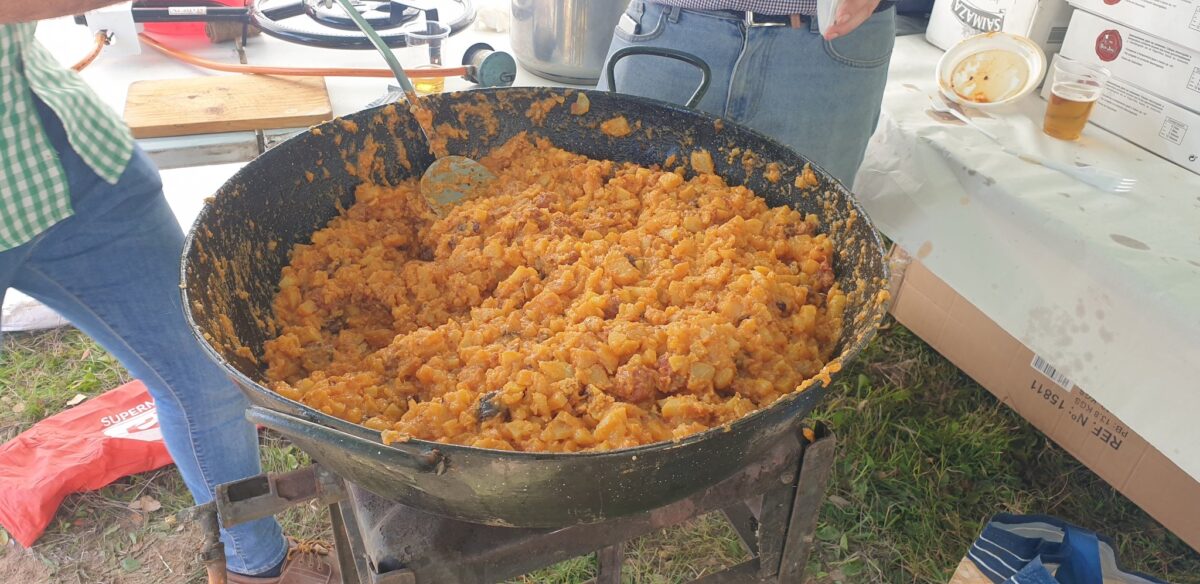
In this festive and welcoming atmosphere, traditional dishes are prepared and shared around a communal frying pan, as tradition dictates. The popular expression ‘in Chucena we throw a party even for a bunch of vine shoots’ perfectly sums up the cheerful, hospitable and festive nature of its people, who are capable of turning any occasion into a cause for celebration.

La Fritá is not just a gastronomic event. It is also an act of local identity, in which solidarity, popular culture and the connection with the environment come together to create an unforgettable day.

Fiestas Patronales de la Virgen de la Estrella

Every year, between 14 and 17 August, Chucena celebrates its Fiesta Grande in honour of the Virgen de la Estrella, patron saint of the municipality. These festive days, which take place in the central squares of Andalucía and La Iglesia, are experienced with great intensity and neighbourhood participation, becoming a benchmark of identity and devotion for the town.

The programme of activities includes a wide range of recreational and cultural events for all ages. Highlights include children’s competitions and family activities, sports competitions, musical and artistic performances, horse races, candy showers, water trucks to cool off the summer heat, and the fire bull, a much-anticipated tradition during the festive nights.

All this takes place in a carefully decorated setting, where the conviviality, joy and warmth of August give shape to one of the most endearing festivals in the region.

The most solemn and emotional moment of the festivities takes place on the night of 15 August, when the image of the Virgin of the Star is carried in procession through each and every street of the municipality. Accompanied by her devotees and the music of the bands, the Virgin walks among the fervent crowd until well into the early hours of the morning, marking a spiritual and collective milestone in the life of the town.