


Visita 360

Feria del Vino

The Chucena Wine Fair is one of the most important events in the wine sector in the province of Huelva and takes place every November to coincide with the end of the grape harvest. This famous fair was created with the aim of promoting the rich wine culture of Chucena and making it known beyond the municipality and the region.

Wine in Chucena is a key element of its tourist offering, present in its heritage, history, culture, landscape and gastronomy, which is why it has become a must-see event for lovers of wines from the County of Huelva.

The fair has a large shopping and exhibition area, as well as a packed programme of activities to enjoy a unique weekend. Activities include musical and comedy performances, parades, tastings and pairings, workshops and children’s activities.

The Chucena Wine Fair is an opportunity to discover and enjoy the municipality’s wine-making tradition in a festive and welcoming atmosphere that reflects the identity and spirit of the Chucena community.
Corpus Christi

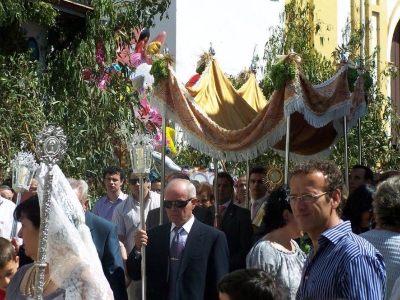
The Corpus Christi celebration in Chucena is one of the most emblematic and deeply rooted festivities in the municipality, where faith and tradition are manifested in a collective expression of devotion and ephemeral art.

Every year in June, the streets of Chucena are transformed into a scene of solemnity and beauty. The residents throw themselves into decorating the procession route, adorning the streets with branches of eucalyptus, rosemary and sedges, which fill the air with their characteristic aromas. Balconies are decorated with shawls and hangings, and popular altars, known as ‘cordeles’, are erected, reflecting the care and creativity of the community.

The procession of the Blessed Sacrament, carried in a canopy, travels through the streets accompanied by the various local brotherhoods and associations, as well as a band that enhances the festive and spiritual nature of the event. Of particular note is the participation of the boys and girls who have received their First Communion, who, dressed in their finery, form part of the procession, symbolising the continuity of faith in the new generations.

In the past, the Corpus Christi festival in Chucena was extended with the celebration of the ‘Octava’, a second day of festivities that took place eight days after Corpus Christi. Although this tradition has fallen into disuse, it remains in the collective memory as a testimony to the cultural and religious wealth of the municipality.

The organisation of the liturgical and processional events is carried out by the Sacramental Brotherhood of Nuestra Señora de la Estrella, which, together with the collaboration of the Town Council and the active participation of the residents, guarantees the continuity of this celebration, which constitutes a true intangible heritage of Chucena.

Dia de todos los Santos

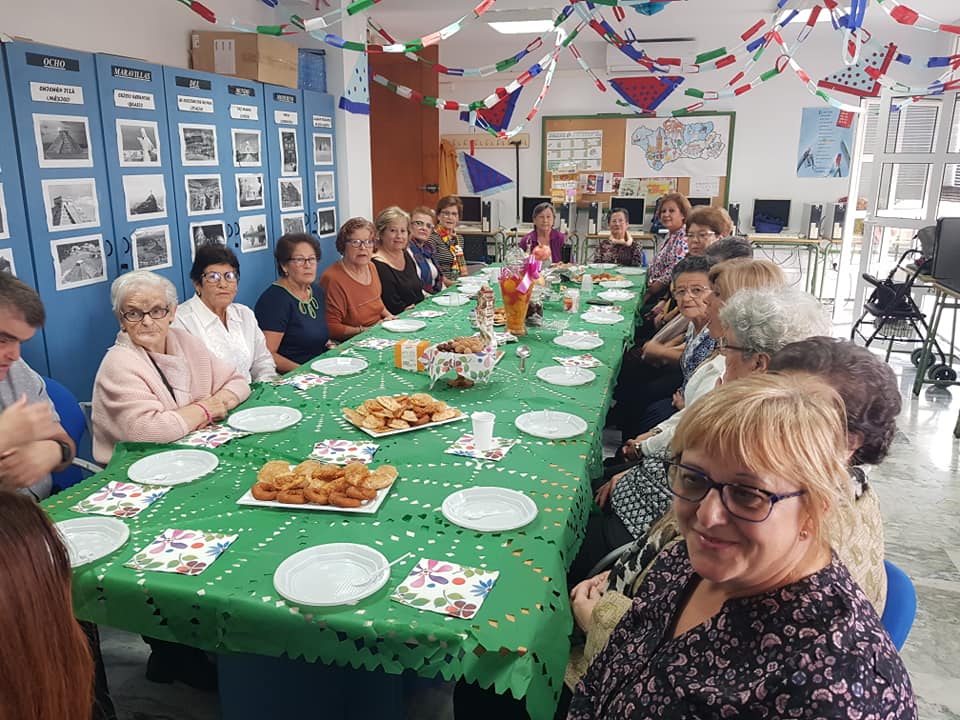
Every 1st of November, with the arrival of the first cold spells, Chucena celebrates one of its most cherished and eagerly awaited festivals: the Mesa de Tosantos. This tradition, deeply rooted in the life of the municipality, brings together residents of all ages in an atmosphere of fraternity, flavour and collective memory.

From the beginning of October, groups of friends and families—popularly known as ‘pandillas’—enthusiastically organise themselves to find a suitable venue to celebrate this special day. The preparation of the table becomes a real ritual, passed down from grandparents to grandchildren, in which every detail counts.

The decoration is handmade and very carefully crafted: the walls of the venue are adorned with colourful tissue paper chains, while the tables are covered with hand-cut tablecloths, imitating the motifs of traditional table linen. On top of them, a rich variety of seasonal products and homemade sweets are lovingly displayed, forming an authentic gastronomic puzzle full of aromas, colours and memories.

There are soft drinks for the little ones, sweet wine for the grown-ups and an exquisite collection of local pastries: harvest sweets, such as correones, arrope or the original espoleá de mosto; and other typical local sweets, such as fried rosquitos, abuelas, gañotes, canelones or honey and sugar roses.

The feast is rounded off with autumn fruits, including roasted chestnuts, sweet potatoes, pomegranates and gamboas (quince).
The Mesa de Tosantos is a celebration that goes beyond gastronomy: it is an expression of conviviality, of caring for our heritage and local identity. A day to get together, share and welcome winter with traditional flavours and the joy of being together.

Verbena

Thursday afternoon. The festival begins when the stewards of La Cruz, organiser of the pilgrimage, gather to collect the Padrino. Accompanied by the stewards of the street to the sound of the ‘Romerito’, the Padrino collects the Madrina and they begin their journey through the different streets of the town to the church, where Mass will be celebrated, accompanied at all times by the Bonares Music Band.

The procession is made up of the stewards of the organising street, dressed in traditional Andalusian costume. All the emblems of the street are also paraded in the procession: the flag (leading the procession), the Simpecado and the Paso con la Cruz, preceded by the Padrinos.

Once the Mass is over, the entire procession makes its way through the different streets of the town until it reaches its chapel, where the cross is reinstalled so that it can be visited. Then the festivities begin, with the stewards of the cross inviting all those gathered to eat and drink in different halls and/or houses. The festival lasts until dawn, enlivened by singing and dancing.

Serenata

When Holy Sunday arrives, the popular serenade begins in the Town Hall Square in front of the Cruz del Rincón.

The Bonares Music Band, accompanied by all the cruceros and cruceras, visit the Chapels of the Crosses, each one awaiting them with fireworks and ringing bells, welcoming this heart-warming event.

In front of the Glorious Cross, eight sevillanas are played, which are danced by all the townspeople attending this unique event of popular folklore.

Amidst the sounds of the band, the dancing, the locals and visitors around the Cross, the town bids farewell to such a heart-warming festival, rich in popular crafts and unique beauty in the surrounding area.

Santa María Salomé

‘La Santa’ is celebrated in October, traditionally from 21 to 25 October, but this can vary, although 22 October, the patron saint’s day, is always observed. It is a festival with deep roots in popular culture, with its traditional marquees, which make it a unique folkloric event for the people of Bonariegos. As its name suggests, it is held in honour of Santa María Salomé.

Nowadays, it is celebrated in the new park and fairground, named Alcalde Juan Coronel Martín, which is located near the chapel of Santa María Salomé. During these days of festivities, the Bonares fairgrounds are transformed into a lively city, with more than 160 stalls, including the Bonares Pensioners’ Home and the Gran Caseta Municipal, where municipal events and institutions of the Patron Saint’s Festivities are held.

The fair lasts for five days, the most important of which is 22nd October, the feast day of the patron saint of Bonares, Santa María Salomé, when a mass is held in her honour, followed by a procession with her image. In the past, the saint was carried on the shoulders of the young men who were going to do their military service that year, but nowadays it is carried by those who are coming of age and members of the Brotherhood, as well as the Music Band and a crowd of locals.

On the other days of the fair, all the locals enjoy themselves to the fullest in the fairgrounds, both during the day and at night.

Romerito

‘Romerito’ refers to the pilgrimage organised by the Cruz (Cross) that is the protagonist of that year, which is attended by members of the other crosses and the entire town.

In the morning, all the participants gather in Calle de la Cruz, where the line is organised and the procession begins until it reaches the parish church. The first event of the day is the blessing of the bouquet of flowers carried by the godmother and its placement on the cart with the Simpecado of the Cross of the Rosemary. Once the bouquet has been blessed, a procession takes place through different streets of the village to the natural spot ‘El Corchito’, where the pilgrimage is celebrated.

At dusk, to the sound of fireworks, the pilgrims are called to organise the return procession, in the same order as in the morning, but preceding the cart are the Padrinos del Romero and the Padrinos de la Cruz, who will be in charge of organising the pilgrimage the following year. Once they have travelled through several streets of the village, both padrinos stand in the Plaza de la Constitución, together with the Cruz del Rincón and the local authorities. Once everything is ready, all the pilgrims parade, expressing their commitment to the festival with a loud ‘Viva la Cruz y el Romero!’ (Long live the Cross and the Rosemary!).

When the entire procession has passed, the ‘entrega de varas’ (handing over of the sticks) takes place, that is, the Padrino hands over the ‘Vara del Romero’ to the Mayor, who in turn hands it over to the Padrino de la Cruz, who will be responsible for organising the pilgrimage the following year.

Once the ‘Vara’ has been handed over, the procession moves to Calle de la Cruz, which will be responsible for organising the festival, where the stewards invite all those gathered to ‘caldo’ (broth). This is the first event that the Cruz del Romero has to organise the following year.

Domingo de Resurrección

Easter Sunday morning begins with the Dawn Mass, which is undoubtedly the prelude to the festivities in honour of the Crosses. After the Dawn Mass, the ‘Padrinos’ (godparents) of the Cross, who are responsible for organising the pilgrimage that year, are accompanied from the church to the chapel of their Cross by a procession led by the local authorities, the godparents of the previous and following year’s pilgrimage, and supported by all the residents of the village. To the sound of the ‘Romerito’ performed by the Bonares Music Band, the procession makes its way to the ‘pilgrim’s street’, which, according to custom, is covered with a carpet of this aromatic plant, and where all those gathered are invited to breakfast.

Día de la Cruz

At dawn on Sunday, with the sound of fireworks and the reveille played by the band, the big day of the local festivities begins. With the ringing of bells in the belfry of the chapels of Las Cruces, each one sets off for the parish church where a solemn Mass will be celebrated in honour of the Holy Cross. There, in strict order of seniority, they will be placed in the naves of the church facing the transept.

After Mass, the twelve crosses are carried one after the other in procession through the streets of Bonares until they reach the Plaza de la Constitución, where they are arranged in two rows, one in front of the other, always in order of seniority, leaving a passage between the two rows that coincides with the centre of the square.

The local authorities and the Cross of El Rincón are placed on the main façade of the Town Hall, where the ‘Caídas’ (falls) will be performed. These consist of three bows made by each Cross as it walks towards the Rincón Cross along the aisle between them to the rhythm of the ‘Romerito’ music. When all the Crosses have made the Caídas, it is the Cruz del Rincón that makes the three bows to the others, on this occasion from its place.

Once this act is over, each Cross returns to its chapel accompanied by its stewards.

Cruces Chicas

On 1 May, the ‘Cruz Chica’ (Little Cross) is celebrated, an imitation of the festive ritual of the Day of the Cross, but starring children. For a time, this tradition had been lost, but thanks to the intervention of the Town Council, it has been celebrated again every year since 1987.

The Cruces Chicas follow the same ritual as their counterparts and take the same procession route. Perhaps the most noticeable difference is in the excitement and the costumes (flamenco dresses), as well as in the size of the crosses, flags and simpecados (banners) in the different streets. At the end of the procession, the participating children perform the traditional ‘falls’ from the balcony of the Town Hall, which are judged by a popular jury made up of boys and girls from each Cross. Once the final count has been made, the Town Hall awards a plaque as a souvenir of the event to the three best Crosses that have performed the falls, as well as a financial contribution to each of them so that this festival can continue to be held.