


Visita 360

Ruta Huerto del Hambre

The route begins in the municipality of Villarrasa and ends at the ‘Dehesa Boyal’, better known by the locals as ‘Huerto del Hambre’ (Hunger Garden). The route is enhanced by the beautiful landscapes of Campiña (predominantly sunflower and cereal crops) and Andévalo (olive trees, eucalyptus trees, rockroses, etc.).

You enter the municipality by passing the Ermita de Nuestra Señora de las Angustias chapel on your right and continuing along Alférez García Mateo, Larga and Cruz streets until you reach the farm parallel to the cemetery, where the La Torre path starts towards the Granja de los Tablazos farm.

Up to approximately kilometre 2, you can see dry crops and some small areas of olive trees cooled by the Arroyo San Vicente stream. You will then see a path on the left leading to the Mirador Minero viewpoint, where you can see the course of the River Tinto and the ruins of the mills.

Continue to the old Riotinto-Niebla railway line, running parallel to the river and leaving the La Aradilla bridge on your left. Here you will see farmland, eucalyptus trees, rockroses and the ruins of mills, all integrated into the beautiful landscape formed by the curves of the Tinto River.

Arriving under the old Gadea bridge, you can admire an old dam next to an 18th-century mill. You can cross the bridge and return along the opposite bank of the Tinto, once again enjoying the beautiful landscapes of crops, olive trees and cereals. You can also spot a multitude of birds such as storks, bee-eaters, hoopoes, etc., typical of open spaces and scrubland.

Once you arrive back at the ‘Puente La Aradilla’ bridge, turn towards the ‘Dehesa Boyal’, crossing fields of cereals and abundant rockroses, gorse, wild olive trees, etc., cooled by the Arroyo Rubio stream.

Once you reach Huerto del Hambre or Dehesa Boyal, you can see the beautiful landscape composed of rockroses, palm hearts, oleanders (near the watercourse), eucalyptus trees, fields of crops (sunflowers and olive trees), and also its recreational area, where there is a bullring at the foot of the ‘Casa de la Cumbre del Sordo’ mountain, as well as a small ranch, better known as ‘Rancho el Willy’.
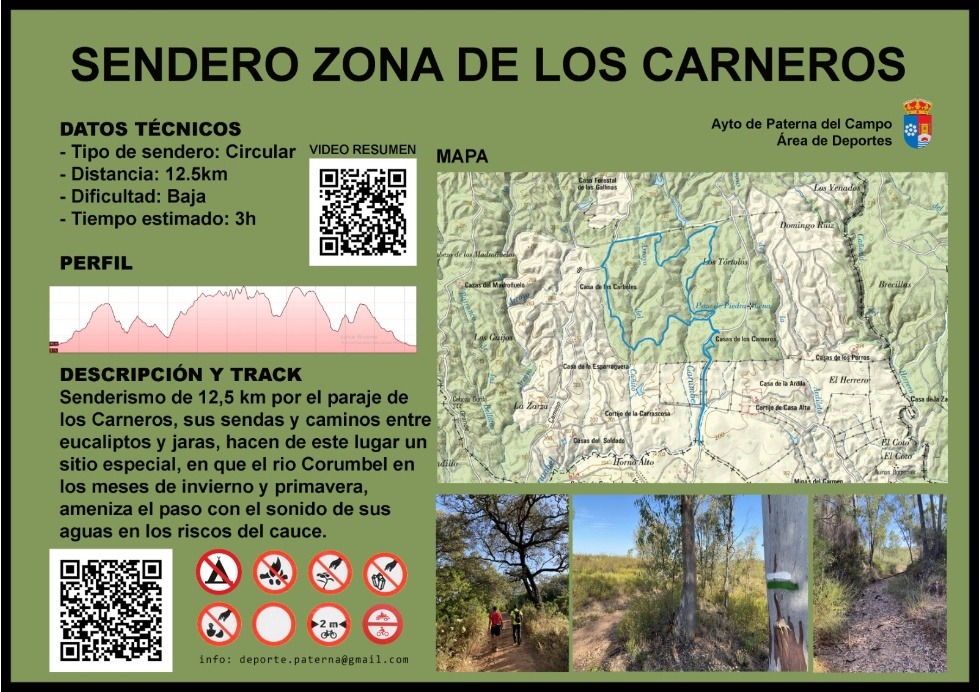
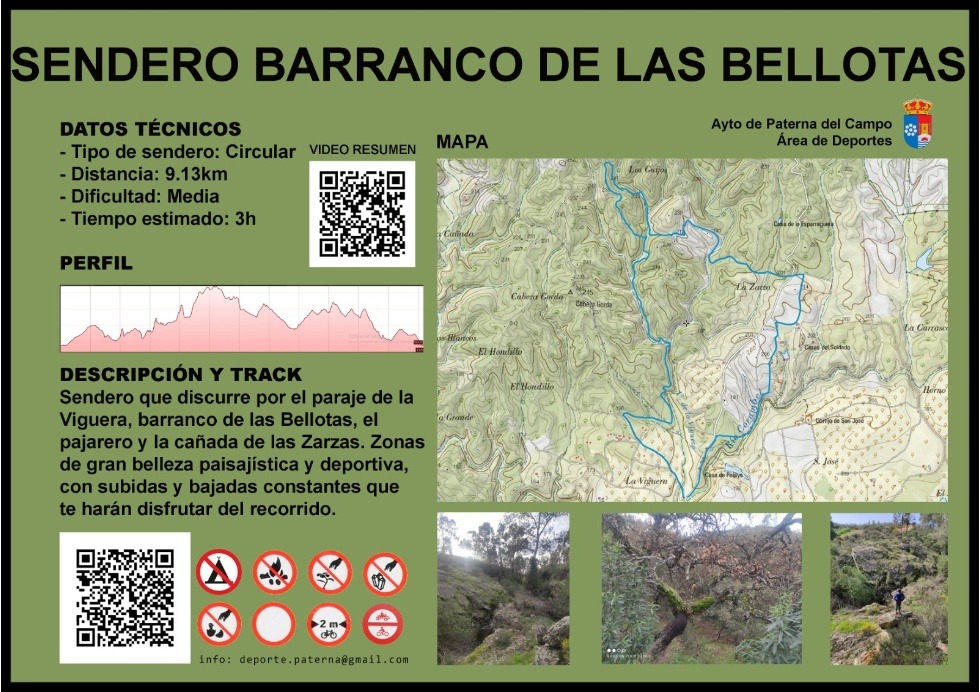
Ruta Sierra Norte

The Sierra Norte Route in Villalba del Alcor is an 11-kilometre itinerary of moderate difficulty that offers a unique experience by combining the agricultural wealth of the County of Huelva with the natural landscapes of the Huelva mountains. This route is ideal for those who want to explore rural environments and enjoy the local biodiversity.

The route begins on the road to Berrocal, leaving from Villalba del Alcor. The first section crosses agricultural countryside, characterised by dry crops such as cereals and vineyards, which reflect the agricultural tradition of the area. After crossing the Huelva-Seville railway line via a picturesque bridge, the asphalt road gives way to sandy and gravel paths, introducing walkers to a more natural and wild environment. As you progress, the landscape transforms into a mountain range with livestock and silvopastoral activity. At kilometre 5.2 is the Alcaboso stream, a highlight of the route that marks the entrance to areas of greater biodiversity.

The route offers a transition from agricultural land to more complex ecosystems, where it is possible to observe a variety of native flora and fauna. The presence of livestock and silvopastoral activities in the mountains contributes to the conservation of the landscape and local biodiversity.

Ruta circular Rociana-Bonares

This 31 km route is easy and starts in Rociana del Condado, passing through places such as El Corchito and the Arboreto del Villar, and returns to Rociana after skirting the Moriana stream.

After setting off, as you pass along the Verilla del Rosal path, you can enjoy amazing views of the Condado. There are also fields, pine trees, eucalyptus trees and olive groves. At the sports centre, you can take a one-kilometre detour to Bonares along the path parallel to the HU-3108.

Continuing along the route, you cross a footbridge to reach El Corchito, a huge pine forest with trees of considerable size. At kilometre 12, you will reach a paved road leading to the Arboreto del Villar, located in Coto de la Matilla.

From El Villar, you can go back 500 metres to the intersection with Rociana, take the road on the right and then continue straight on to the Moriana stream. Enjoy the birdsong, some of them birds of prey such as the booted eagle. At this point, of enormous beauty, the landscape begins to change, with dry crops appearing and reigning supreme until you reach Rociana del Condado.

Ruta Villalba del Alcor – Paterna del Campo

The route between Villalba del Alcor and Paterna del Campo covers approximately 11 kilometres and is ideal for those seeking a hiking experience that combines nature and historical heritage.

The route begins in Villalba del Alcor, taking the Berrocal road. After about 2.5 km, you leave this road and join the Seville-Huelva road. Along the route, you will cross footpaths and rural roads, allowing you to observe farmland that has maintained its essence over the centuries. Most of the route is downhill, making it easy to reach the Aguilones footpath, which leads directly to Paterna del Campo.

At the beginning and end of the route, it is recommended to visit the monuments of both municipalities. In Villalba del Alcor, the church-fortress of San Bartolomé, a building of Almohad origin declared a Site of Cultural Interest, and the convent of San Juan Bautista, founded in 1618 and known for its architecture and Baroque altarpieces, are noteworthy. In Paterna del Campo, you can see the castle of Alpízar, an ancient fortress with an Almohad-style doorway, and the chapel of San Isidro Labrador in the village of Tujena, which dates from 1955 and is the centre of a popular pilgrimage in May.

At the end of the tour, you can enjoy the local cuisine in Paterna del Campo, known for its chickpea stews, traditional sweets and cold meats.

Ruta Paterna del Campo – Berrocal

The route from Paterna del Campo to Berrocal is 32 km long with an estimated duration of 8 hours. It is linear and of medium-high difficulty, and can be travelled by bicycle.

The itinerary begins in Paterna del Campo and ascends towards Berrocal, passing through olive groves, eucalyptus forests and cork oak forests. Along the way, you can see the village of Tujena, Alpízar Castle (declared a Site of Cultural Interest) and the Acebuchal de Alpízar (a Site of Community Importance).
At the top of the Cuesta del Carril, you can enjoy sweeping views of the Tinto River gorge, the Sierra de Alcántara and the Pata del Caballo, a national reserve.

The route ends at the Plaza de Andalucía in Berrocal, where the municipality’s Santa Cruz festivities are held.

Ruta Pata del Caballo

The route through the Pata del Caballo forest area is a linear itinerary of approximately 23 km of medium-high difficulty. It is suitable for both hikers and cyclists, although some sections require caution.

The route begins in the countryside of Tejada, in the town of Paterna del Campo, and enters the Pata del Caballo forest, an estate of more than 7,000 hectares located in the municipality of Escacena del Campo. The route follows agricultural roads and forest tracks, crossing olive groves and areas of Mediterranean vegetation, such as rockroses and holm oaks.

After the fifth kilometre, the path becomes rocky and more difficult until it reaches Casa del Carnero. This is one of the highlights of the route, offering panoramic views of the Condado countryside. A little further along the track, you can take the short variant of the route to the Castillejos reservoirs and from there join the main route at the Gallinas junction. If you continue along the main route, you will climb up to the Torre del Cejo, one of the highest points in the Condado, which offers one of the most impressive views of the surrounding area.

A little further on is the turn-off for the Barranco de los Laureles, a grove classified as unique for its ecological value; and a little later, the second turn-off: the Las Contiendas forest house, recently restored and used for gatherings and meetings. These are two highly recommended options if you have the energy. If not, simply continue along the forest track, passing through Puerta de las Gallinas and La Viguera until you reach the end of the route: the village of Tujena.

It is important to note that some sections of the route, especially from kilometre 5 onwards, are more demanding, with stony paths and wet areas that can make it difficult for bicycles to pass.

Ruta Fortificaciones Romanas y Minas del Barranco Abadejo

The route of the Roman fortifications and mines of the Abadejo ravine offers a hiking trail of some difficulty, ideal for those seeking to combine physical exercise with the discovery of the historical and natural heritage of the area.

The itinerary begins in the vicinity of the Roman mining complex of Torviscoso, located next to the right bank of the Abadejo stream. This enclave is notable for housing a Roman castellum, an ancient fortification that controlled the traffic of ore extracted from the numerous mines in the area.

The route enters a landscape between the Yeguas valley and the Maderos lane, characterised by its impressive views, high altitudes and deep ravines. Along the route, you can see the remains of mining operations dating back to pre-Roman and Roman times, evidence of the intense mining activity that took place in the region.

This trail not only allows you to enjoy a natural environment of great beauty, but also to learn about the mining and military history of the area, offering an enriching experience for lovers of hiking and archaeology.

Ruta de senderismo Aldea de Tujena – Antiguos hornos de cal

Starting from the village of Tujena, you can take an interesting hiking route, visiting the old lime kilns in the mountains. Taking the Santa Ana path, you will first come across the so-called ‘Horno de Moya’ (Moya Kiln). The path then continues towards Santa Ana and, from there, to the area known as ‘la Chata’, where you will find a good selection of these kilns, such as the Montaraz, the Legionario and Luis la Chata, among others. To find them, you will need to be accompanied by someone who knows the area well.

The production of quicklime and mortar in the Paterna del Campo mountains involved the application of a series of traditional techniques that were linked to a thousand-year-old tradition spread throughout the Mediterranean arc. From their origins, these ancestral techniques were passed down and continued without major changes until the early 1960s, when they practically disappeared with the widespread use of cement. The technique of firing limestone has its origins in the Neolithic period, but it was the Romans who, at the end of the 3rd century BC, systematically used kilns to produce quicklime, which was then slaked with water and mixed with sand to produce high-quality mortar for their large constructions.